
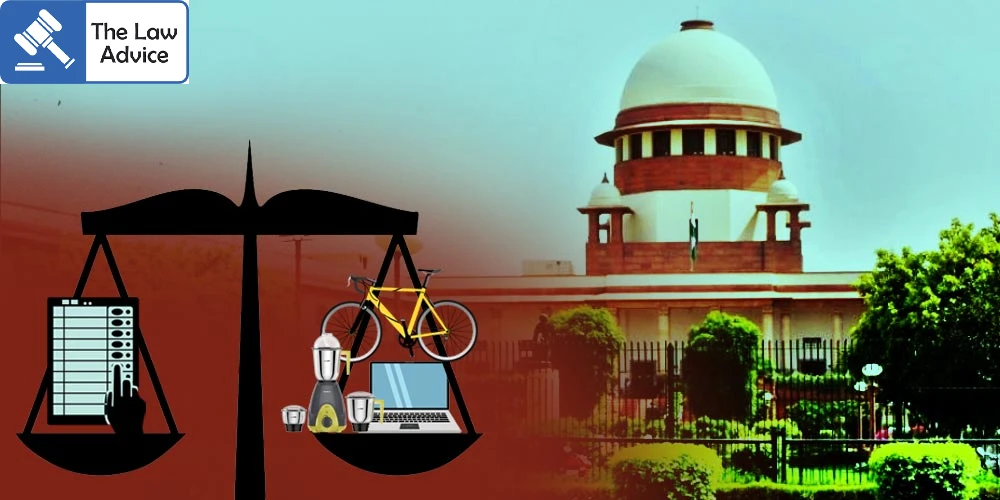
The Supreme Court of India on Thursday strongly criticised the growing practice of State governments announcing “freebies” just before elections, warning that such measures could harm the country’s long-term economic development.
The Court said indiscriminate distribution of benefits, without distinguishing between those who can afford to pay and those who cannot, amounts to appeasement and is not healthy for the economy. It questioned how long this trend would continue and whether frequent direct cash transfer schemes discourage people from working.
A Bench led by Chief Justice of India Surya Kant, along with Justices Joymalya Bagchi and Vipul Pancholi, made these observations while hearing a writ petition filed by the Tamil Nadu Power Distribution Corporation Limited challenging Rule 23 of the Electricity Amendment Rules, 2024.
During the hearing, the Chief Justice questioned the policy of States absorbing electricity bills and other costs as part of welfare schemes. He said that while helping marginalised sections is a constitutional duty of a welfare state, providing blanket freebies to everyone — including those who can easily pay — raises serious concerns.
The CJI pointed out that even revenue-surplus states should prioritise spending on long-term development such as roads, hospitals, schools, irrigation and infrastructure, instead of distributing goods and cash around election time. He said such practices create a culture of dependency and could slow down national development.
Raising concerns over direct cash transfer policies, the Court asked whether people would still feel the need to work if the State provides free food, gas, electricity and cash. The CJI stressed that employment generation is essential to maintain dignity, self-respect and sustainable growth.
The Court noted that it is already hearing other petitions related to the freebies issue and said the matter requires serious reconsideration by political parties and policymakers across the country.
In the present case, the Court agreed to examine the challenge raised by the Tamil Nadu power utility and issued notice to the Union of India.
Case: Tamil Nadu Power Distribution Corporation Limited vs Union of India
W.P.(C) No. 158/2026
Website designed, developed and maintained by webexy