
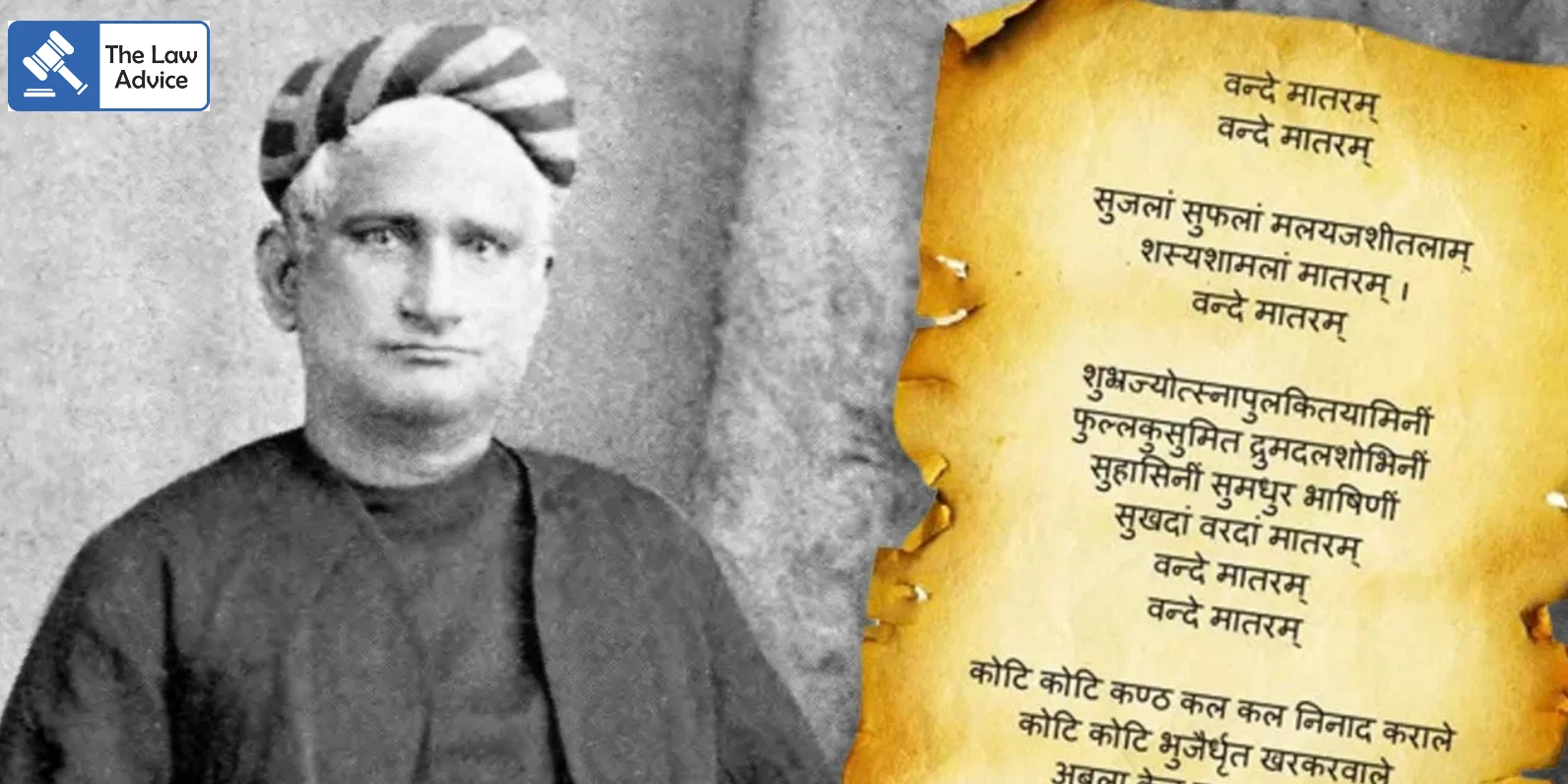
The Supreme Court on Tuesday sought the Centre’s response to a petition challenging the constitutional validity of the 2026 amendment to the Prevention of Insults to National Honour Act, which criminalises intentionally preventing the singing of the National Anthem or National Song, or disrupting an assembly engaged in such singing.
A Bench comprising Chief Justice of India Surya Kant, Justice Joymalya Bagchi and Justice V Mohana asked the Union government to respond within two weeks to the plea filed by Carnatic vocalist TM Krishna.
Krishna has challenged the amended Section 3 of the Prevention of Insults to National Honour Act, 1971, as well as Ministry of Home Affairs directions requiring the complete six-stanza version of Vande Mataram to be sung at specified government, ceremonial and cultural events.
The amended provision provides for imprisonment of up to three years, a fine, or both for intentionally preventing the singing of the National Anthem or National Song, or causing disturbance to an assembly engaged in such singing.
During the hearing, Justice Bagchi referred to the Supreme Court’s 1986 judgment in Bijoe Emmanuel v. State of Kerala, which protected schoolchildren who respectfully stood during the National Anthem but did not sing it due to their religious beliefs.
The judge observed that the principles laid down in Bijoe Emmanuel continue to hold the field, indicating that a conscientious objector who does not sing one or more stanzas of Vande Mataram should not face criminal prosecution.
Senior Advocate S Muralidhar, appearing for Krishna, argued that the amended law suffers from vagueness as it does not define what constitutes the “National Song”. He also questioned the legal basis of relying on an office memorandum to impose consequences under a penal statute.
The plea contends that the Centre’s directions effectively compel citizens to participate in singing all six stanzas of Vande Mataram, including the later stanzas which contain references to Hindu deities such as Durga, Lakshmi and Saraswati.
Krishna has challenged the measures on grounds of Articles 14, 15(1), 19(1)(a), 21 and 25(1) of the Constitution, dealing with equality, non-discrimination, freedom of speech and expression, life and personal liberty, and freedom of conscience and religion.
The plea further relies on the historical distinction between the first two stanzas of Vande Mataram and the remaining four, and refers to the 1937 Congress Working Committee decision to restrict its rendition at national gatherings to the first two stanzas.
During the hearing, Solicitor General Tushar Mehta opposed the issuance of formal notice, stating that it could “create a sensation”. He also questioned the petitioner’s approach to the issue.
A sharp exchange followed between Mehta and Muralidhar after the Solicitor General referred to the petitioner in connection with the term “Naxalite”. Muralidhar objected to the use of the expression by a law officer, but Mehta declined to withdraw the remark.
Krishna has sought the striking down of the amended Section 3 and a declaration that only the first two stanzas of Vande Mataram constitute the National Song. He has also sought interim protection from the operation of the challenged provisions pending final adjudication.
Website designed, developed and maintained by webexy