
The Supreme Court has commuted the death sentence imposed on Waris, who was convicted of repeatedly sexually assaulting and subsequently throttling his six-year-old stepdaughter, to imprisonment for the remainder of his natural life without remission.
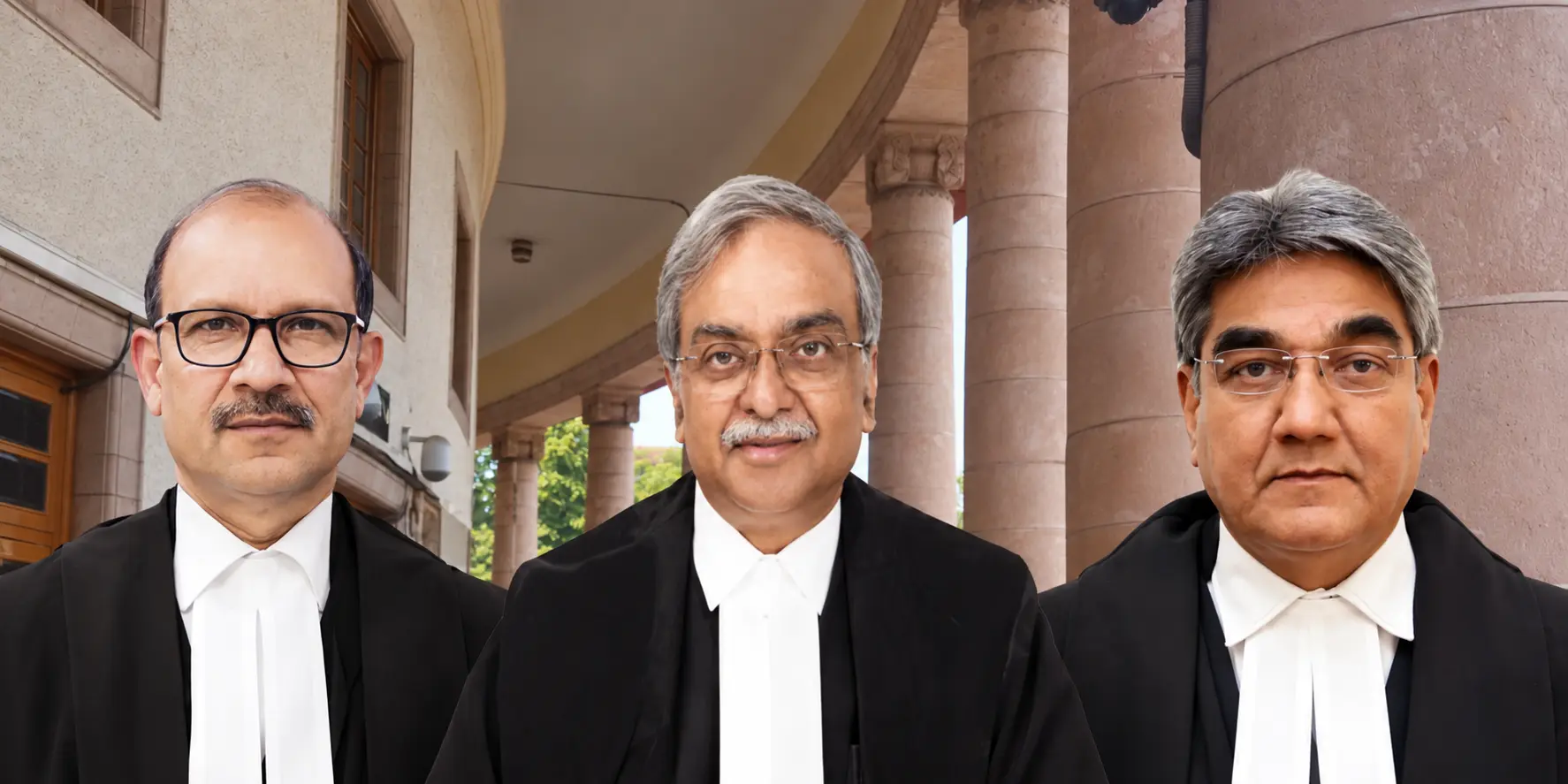
A three-judge Bench comprising Justice Vikram Nath, Justice Sandeep Mehta and Justice Vijay Bishnoi delivered the judgment in Waris v. State of Madhya Pradesh on September 24, 2026. Pasted markdown
The appellant had been convicted under Sections 376(2)(f), 376(2)(n), 376AB, 302 and 201 of the IPC, along with Sections 5 and 6 of the POCSO Act. The Trial Court had awarded the death penalty for offences under Sections 376AB and 302 IPC, and the High Court of Madhya Pradesh had confirmed the death sentence. Pasted markdown
The case acquired an unusual dimension before the Supreme Court because the victim's mother, who was the solitary eyewitness to the events inside the house, had initially been cross-examined by a legal aid counsel who was appointed on the very day her evidence was recorded.
The Supreme Court had therefore directed further cross-examination of the witness in 2025, observing that the original arrangement had caused prejudice to the appellant in conducting an effective cross-examination. The further cross-examination was conducted on June 14, 2025, by counsel of the appellant's choice. The Court ultimately held that the defect in the original cross-examination had been adequately remedied. Pasted markdown
The Court thereafter examined the mother's testimony along with the medical and other corroborative evidence.
The post-mortem examination established that the child died due to asphyxia caused by throttling, and the death was homicidal. The medical examination also recorded a fresh injury at the fourchette with bleeding, which the autopsy surgeon opined was indicative of sexual assault. Pasted markdown
The Court found that the mother's account of the appellant sexually assaulting the child and subsequently throttling her was corroborated by the medical evidence. The Court also noted that the call detail record independently confirmed two calls made by the mother to the appellant on the morning of April 23, 2018, at 09:20:30 and 09:21:24 hours. Pasted markdown
The Bench held that the fact that the witness was related to the victim did not by itself make her an “interested witness” and examined her evidence on the basis of reliability and corroboration. Pasted markdown
While considering the sentence, the Supreme Court examined both the aggravating circumstances of the crime and the mitigating circumstances relating to the appellant.
The Court noted mitigating factors including the appellant's absence of prior criminal antecedents, satisfactory conduct in custody, family ties, childhood deprivation and adult circumstances, as well as the fact that he had spent about eight years in custody, approximately seven of them under the sentence of death. Pasted markdown(20261002-101753)
The Court also reiterated that before imposing the death penalty, the possibility of reformation and rehabilitation must be genuinely considered and that the State bears the burden of establishing that the convict is beyond the possibility of reform. Pasted markdown(20261002-101753)
The Supreme Court concluded that although the crime was of the utmost gravity, the State had not excluded the possibility of the appellant's reformation. The Court held that imprisonment for the remainder of his natural life without remission would adequately meet the ends of justice.
Accordingly, the Court commuted the death sentence imposed under Sections 302 and 376AB IPC to imprisonment for the remainder of the appellant's natural life, with no remission.
The sentences imposed for the remaining offences under Sections 376(2)(f), 376(2)(n) and 201 IPC and Sections 5 and 6 of the POCSO Act were affirmed, with all substantive sentences directed to run concurrently. Pasted markdown(20261002-101753)
The Court clarified that the sentence imposed is a sentence of utmost severity, second only to the death penalty, and would confine the appellant in prison for the remainder of his natural life without the possibility of release through remission. Pasted markdown(20261002-101753)
Case: Waris v. State of Madhya Pradesh
Citation: 2026 INSC 1050
Criminal Appeal Nos.: 429-430 of 2020
Judgment Date: September 24, 2026
Bench: Justice Vikram Nath, Justice Sandeep Mehta and Justice Vijay Bishnoi

Website designed, developed and maintained by webexy