
In a significant ruling on the misuse of criminal proceedings, the Supreme Court has held that the filing of a subsequent complaint containing material improvements over an earlier complaint can raise serious doubts about the genuineness of the prosecution and may justify quashing of criminal proceedings.
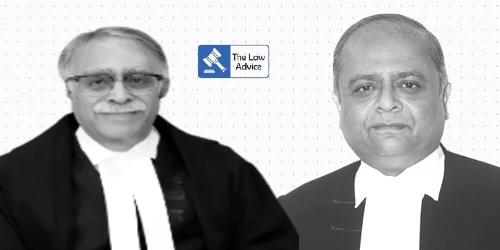
A Bench comprising Justice Sanjay Karol and Justice Vipul M. Pancholi allowed an appeal filed by the accused and quashed the FIR and all consequential proceedings in a property dispute that had been pending in civil courts for several years.
The case concerned a long-running dispute over Survey No. 157 situated in Village Panas, Surat, Gujarat. Civil litigation relating to the property had been ongoing since 2000.
The complainant alleged that the accused had forged documents, cheated him of his property rights and attempted to extort ₹1.5 crore. However, the Supreme Court noted a crucial inconsistency: an earlier complaint lodged in May 2009 did not contain any allegation of extortion, criminal intimidation, forgery or conspiracy. These allegations surfaced only seven months later in a second complaint, which was registered as an FIR on December 31, 2009.
Writing the judgment, Justice Pancholi observed that the allegation of extortion was one of the gravest accusations in the FIR, yet it was completely absent from the initial complaint.
The Court held:
"The allegation of extortion, which is one of the grave accusations in the FIR, was absent in the first complaint and surfaced only subsequently."
The Bench emphasized that such material improvements significantly alter the nature of the dispute and must be carefully scrutinized while considering whether the criminal process is being misused.
The Court found that during years of civil litigation, the complainant had never raised allegations of extortion, criminal intimidation, forgery or conspiracy before any judicial forum.
According to the Court, the later introduction of these allegations supported the appellants' contention that the criminal proceedings were an afterthought designed to give a criminal colour to what was essentially a civil dispute.
The judgment observed:
"The subsequent introduction of allegations of extortion, demand of money and intimidation in the second complaint materially alters the nature and complexion of the dispute and supports the contention of the appellants that the criminal proceedings are an afterthought intended to give criminal colour to a longstanding civil dispute."
The Supreme Court further reiterated that delay alone may not be sufficient to quash proceedings, but where delay is accompanied by circumstances creating serious doubts regarding the prosecution's genuineness, the Court can exercise its inherent powers to prevent abuse of process.
Relying on its earlier decision in Mohd. Wajid v. State of U.P., the Court observed that criminal proceedings may warrant quashing when the surrounding circumstances indicate abuse of the criminal justice system.
The Bench found fault with the Gujarat High Court for failing to examine the legal consequences of suppressing the earlier complaint and introducing significant new allegations in the subsequent FIR.
Consequently, the Supreme Court set aside the High Court's order and quashed the criminal proceedings against the appellants.
Case Details:-
Bhikhubhai Govindbhai Patel & Anr. v. State of Gujarat & Anr.
SLP (Crl.) No. 15537 of 2023

Representation:-
For Petitioner(s) : Mr. Nachiketa Joshi, Sr. Adv. Mr. Aniket Seth, Adv. Mr. Sai Shashank, Adv. Ms. Sucheta Joshi, Adv. Mr. Rushabh Kapadia, Adv. Mr. Vishal Arun Mishra, AOR Mr. Nachiketa Joshi, Sr. Adv. Mr. Sucheta Joshi, Adv. Mr. Sai Shashank V, Adv. Mr. Karishma Rajput, Adv. Ms. Sagarika Arya, Adv. Mr. Mohit Joshi, Adv. Mr. Ayush Anand, AOR
For Respondent(s) : Ms. Swati Ghildiyal, AOR Ms. Sonakshi Sinha, Adv. Mr. Dhaval D Vyas, Sr. Adv. Mr. Chanchal Kumar Ganguli, AOR Ms. Suruchi Suri, Adv. Mr. Pratyush Jagirdar, Adv.
Website designed, developed and maintained by webexy