
Juvenility Is a Jurisdictional Fact, Not Merely a Mitigating Circumstance: Supreme Court
The Supreme Court has delivered an important judgment on the rights of juveniles in conflict with law, holding that where an accused is subsequently found to have been a juvenile on the date of commission of the offence, the courts cannot deny the statutory protection available under juvenile justice legislation merely because the claim was raised at a later stage.
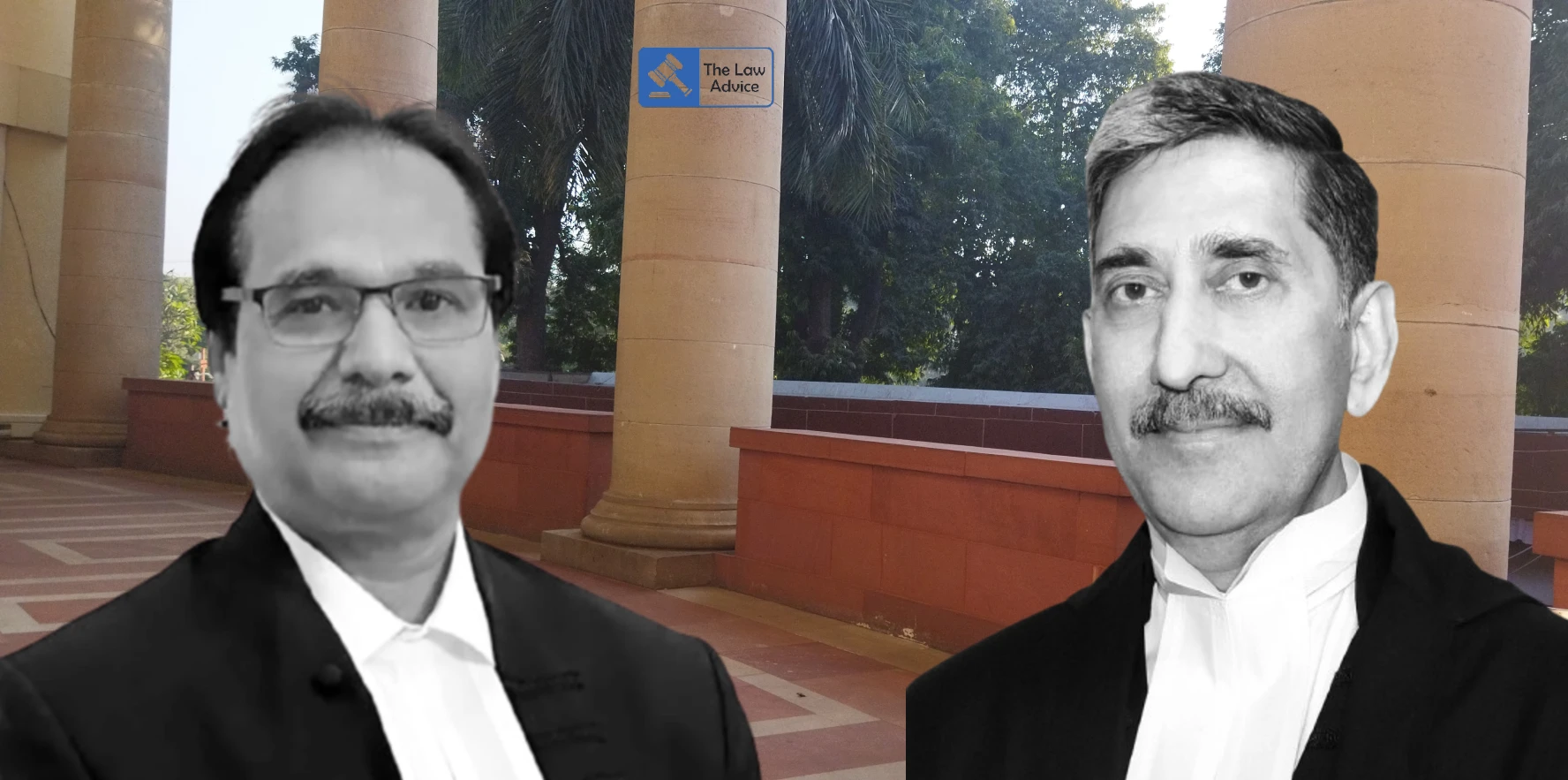
In a significant judgment in Mahavir @ Avnish v. State of Madhya Pradesh, 2026 INSC 942, a Bench comprising Justice Shree Chandrashekhar and Justice Prashant Kumar Mishra set aside the conviction and sentence of the appellant under Section 201 Part II of the IPC, after finding that he was only 17 years, 2 months and 12 days old when the alleged offence took place. The judgment was pronounced on September 2, 2026.
The Court also clarified the scope of the High Court's inherent powers under Section 482 CrPC, holding that the High Court is not powerless to recall its earlier judgment where failure to consider juvenility has resulted in grave prejudice and miscarriage of justice.
Background of the Case
The case arose out of an incident dated September 13, 2004, in Morena, Madhya Pradesh. An FIR was registered on September 17, 2004, concerning the death of Bhuri and her infant daughter Guddi, whose bodies were found on a railway track near village Sikrauda.
The prosecution alleged that Bhuri had been subjected to torture in connection with dowry demands and that the accused persons had committed her murder and thereafter caused disappearance of evidence by removing and cremating the bodies.
The accused included Bhuri's father-in-law, mother-in-law, husband and brothers-in-law, including the present appellant Mahavir alias Avnish.
The accused were prosecuted under Sections 302, 304B and 201 read with Section 34 IPC.
However, during the trial, several prosecution witnesses, including Bhuri's brothers and mother, did not support the allegations of dowry demand or harassment. Several other witnesses were declared hostile. Ultimately, the charge of murder and dowry death was not proved.
The trial court nevertheless convicted the accused under Section 201 Part II IPC, holding that they had caused disappearance of the dead bodies. Each accused was sentenced to three years' rigorous imprisonment and a fine of ₹1,000, with a default sentence of six months' rigorous imprisonment.
Conviction Affirmed by High Court
The conviction dated December 21, 2005 was challenged before the Madhya Pradesh High Court.
The High Court dismissed the appeal on March 17, 2017, thereby affirming the conviction.
Mahavir thereafter approached the Supreme Court. His Special Leave Petition was, however, dismissed as withdrawn on May 11, 2018.
Importantly, the Supreme Court noted that the SLP was not dismissed after examining the conviction on merits. The order simply recorded:
“The special leave petition is dismissed as withdrawn.”
At the same time, the SLPs filed by Mahavir's parents, who were co-accused, were disposed of with their sentences reduced to the period already undergone.
Juvenility Claim Raised Subsequently
After withdrawing the SLP, Mahavir approached the Madhya Pradesh High Court under Section 482 CrPC, seeking recall of the earlier judgment.
For the first time, he specifically raised the plea that he was a juvenile on the date of the offence.
He relied upon his school records and other documentary evidence showing his date of birth as July 1, 1987.
Since the incident occurred on September 13, 2004, he would have been approximately 17 years, 2 months and 12 days old at the time.
Pursuant to the High Court's direction, the matter was examined by the Juvenile Justice Board, Morena.
The JJ Board examined original school records, including Class V and Class VIII marksheets, the birth certificate issued by the Gram Panchayat and oral evidence from relevant witnesses.
The Board found no reason to disbelieve the documents and conclusively recorded that Mahavir was a minor juvenile on the date of the incident.
High Court Refused to Reopen the Case
Despite the JJ Board's finding, the High Court declined to interfere.
The High Court reasoned that:
The High Court consequently dismissed the petition.
It treated the earlier SLP dismissal as resulting in finality of the criminal proceedings and held that its inherent jurisdiction could not be exercised to revisit the conviction.
Supreme Court Finds High Court's Approach "Over Cautious"
The Supreme Court disagreed with the High Court.
The Bench specifically pointed out that the High Court had committed an error of record by treating the Supreme Court proceedings as though the appellant's conviction had been examined and affirmed by the Supreme Court.
The Supreme Court emphasized that Mahavir's SLP had actually been withdrawn, rather than dismissed after adjudication on merits.
The Court observed that the High Court had therefore acted "over cautiously" in considering itself completely barred from examining the juvenility claim.
The fact that the appellant had withdrawn his SLP also assumed significance because, according to his statement before the High Court, he had withdrawn it with the intention of pursuing his juvenility claim before the High Court.
Juvenility Goes to the Root of Jurisdiction
One of the most significant observations in the judgment is the Court's reiteration that juvenility is not merely a mitigating circumstance.
It is a jurisdictional fact.
The High Court itself had correctly recognized that if an accused was a juvenile on the date of commission of the offence, regular criminal courts are deprived of jurisdiction to try and sentence that person in the same manner as an adult.
The Supreme Court emphasized that this question goes to the very foundation of the criminal court's authority to conduct the trial and impose an adult sentence.
Claim of Juvenility Can Be Raised Even After Final Disposal
The Court extensively examined the evolution of juvenile justice law.
Under Section 7A of the Juvenile Justice Act, 2000, a claim of juvenility can be raised before any court and at any stage, including after final disposal of the case.
The legislative intent was to ensure that a person who was actually a child when the offence was committed does not lose the protection of juvenile justice legislation merely because the plea was not raised at the appropriate stage.
The Court referred to a long line of judgments, including:
These decisions collectively demonstrate the consistent judicial approach that juvenility has to be determined with reference to the date of commission of the offence, rather than the date of trial or the date when the claim is subsequently raised.
Delay in Raising Juvenility Claim Cannot Automatically Defeat the Right
The Supreme Court noted that the law has repeatedly recognized that the plea of juvenility may be raised belatedly.
While courts must remain cautious about fabricated or unreliable claims, a genuine claim supported by satisfactory documentary evidence cannot be rejected merely because it was raised after considerable delay.
The Court particularly referred to the statutory framework under which the claim can be raised even after the accused has ceased to be a juvenile.
The emphasis, therefore, is on determining whether the person was actually below 18 years on the date of the offence, rather than penalizing the person for not knowing or asserting the law earlier.
Documentary Evidence Established Mahavir's Age
The JJ Board had before it substantial documentary evidence.
The appellant's:
all recorded his date of birth as July 1, 1987.
School officials and other witnesses also confirmed the date of birth recorded in the educational records.
The JJ Board therefore concluded that Mahavir was 17 years, 2 months and 12 days old on September 13, 2004.
The State did not challenge this finding of the JJ Board.
High Court Had Power to Correct Its Own Error
The Supreme Court then addressed an important question concerning Section 482 CrPC.
The Court held that the High Court's inherent jurisdiction is not completely extinguished merely because an earlier judgment has been passed.
Where an earlier order or judgment has resulted in a miscarriage of justice, the High Court can exercise its inherent power to correct the situation, particularly where a fundamental statutory protection was denied to a juvenile.
The Court explained that the limitation on the High Court's inherent power is largely rooted in judicial propriety and self-restraint.
That principle, however, cannot be invoked to perpetuate a serious legal error.
The Court held that where a juvenile has been denied a statutory benefit and grave prejudice has consequently been caused, the High Court has the power to remedy the situation and secure the ends of justice.
Conviction Under Section 201 IPC Held Illegal
The Supreme Court went further than merely directing reconsideration.
It examined the legal consequence of the appellant's proven juvenility and concluded that his conviction under Section 201 Part II IPC could not be sustained.
The Court held:
“Therefore, the conviction of the appellant under section 201 Part II of the Indian Penal Code must be held illegal.”
Consequently, the Supreme Court set aside both:
recorded against Mahavir by the trial court on December 21, 2005.
Since the appellant was already on bail, the Court also discharged him from the liability of the bail bonds furnished by him.
The appeal was accordingly allowed.
Supreme Court Explains Philosophy Behind Juvenile Justice
The judgment contains an extensive discussion on the philosophy of juvenile justice.
The Court traced the development of child-protection law from international instruments such as:
The Court explained that the State acts as parens patriae in relation to children—that is, the State assumes a protective role for persons who cannot adequately protect themselves.
The constitutional framework also reflects this responsibility through Articles 15(3), 39, 45 and other child-protection provisions.
The Court stressed that juvenile justice is founded not merely on punishment but on care, protection, rehabilitation, development and social reintegration.
Juvenile Justice Act Requires Purposive Interpretation
The Court emphasized that juvenile justice legislation is a beneficial and remedial legislation.
Consequently, courts must adopt a purposive interpretation so that children do not lose statutory protection because of technicalities.
The Court observed that juvenile proceedings are fundamentally different from ordinary adult criminal trials.
Courts therefore should not allow procedural or temporal considerations to defeat the protective object of juvenile justice legislation.
The Court reiterated that the provisions of juvenile justice laws should receive a wide interpretation in favour of protecting children, while still ensuring that claims of juvenility are properly verified.
Important Distinction: Finality of Litigation vs. Protection of Juveniles
A particularly important aspect of the judgment is the Court's treatment of the doctrine of finality of litigation.
The State had argued that allowing the appellant to raise juvenility after several years would undermine finality and potentially open the floodgates to endless litigation.
The Supreme Court, however, made it clear that finality cannot be treated as an absolute barrier when a fundamental statutory protection has been overlooked.
The Court's approach was that the legal system must balance finality with the obligation to ensure that a person who was legally a child at the time of the offence is not subjected to an adult criminal process in violation of juvenile justice law.
In the present case, the Court found that the High Court had incorrectly assumed that the Supreme Court had already affirmed the conviction on merits, when the SLP had actually been withdrawn.
Supreme Court Flags Systemic Failure in Identifying Juveniles
In the concluding portion, the Court highlighted a broader problem extending beyond the individual case.
The Bench observed that the increasing number of cases in which pleas of juvenility are raised at later stages indicates a significant gap in awareness and implementation of juvenile justice law among stakeholders.
According to the Court, investigating agencies are often primarily focused on bringing an accused to justice, while courts before which a child is produced may fail to give sufficient attention to determining the person's age.
As a result, the statutory rights of children may be overlooked.
The Court warned that in such circumstances, the child becomes the casualty of the system.
"A Child Should Not Be Treated as a Criminal"
The Supreme Court's concluding observations carry a strong message for investigators, courts and other stakeholders involved in the criminal justice process.
The Court stressed that a child should not simply be viewed through the lens of criminality.
Children may enter the world of crime because of poverty, inequality, illiteracy, discriminatory surroundings and socio-economic, emotional or psychological circumstances.
The State therefore has a responsibility not merely to punish but to facilitate the reintegration of juveniles into society, rather than permanently stigmatizing them.
The Court concluded that the existing juvenile justice system requires further strengthening, effective monitoring of investigative processes and proper implementation of statutory safeguards.
The judgment in Mahavir @ Avnish v. State of Madhya Pradesh, 2026 INSC 942 is significant because it reinforces that juvenile justice is not merely a concession in sentencing but a distinct legal regime that affects the jurisdiction of criminal courts itself.
The Supreme Court has sent a clear message that courts must remain vigilant in identifying juveniles at the earliest stage, but where that safeguard was missed, technicalities, delay or procedural finality should not become instruments for denying a child the protection guaranteed by juvenile justice legislation.
In the present case, after establishing that Mahavir was a juvenile at the time of the 2004 incident, the Supreme Court ultimately set aside his conviction and sentence under Section 201 Part II IPC and discharged him from his bail bonds.
Judgment: Mahavir @ Avnish v. State of Madhya Pradesh, 2026 INSC 942, decided on September 2, 2026.

Representation:-
For Petitioner(s):- M/S. Prashant Shukla Law Chambers, AOR Mr. Prashant Shukla, Adv. Mrs. Anushree Shukla, Adv. Mr. Kartik Kumar, Adv. Ms. Ojasvi, Adv. Mr. Abhyuday Singh, Adv.
For Respondent(s):- Mr. Dhirendra Parmar Singh, A.A.G. Mr. Aditya Vaibhav Singh, Adv. Mr. Yashraj Singh Bundela, AOR Mr. Arpit Garg, Adv. Mr. Shrinidhi Gupta, Adv.
Website designed, developed and maintained by webexy