
The Supreme Court has clarified the procedure for an accused seeking access to unrelied-upon documents in the possession of the prosecution, holding that where such documents are voluminous, the accused may inspect them and seek specific documents at the appropriate stage of the trial.
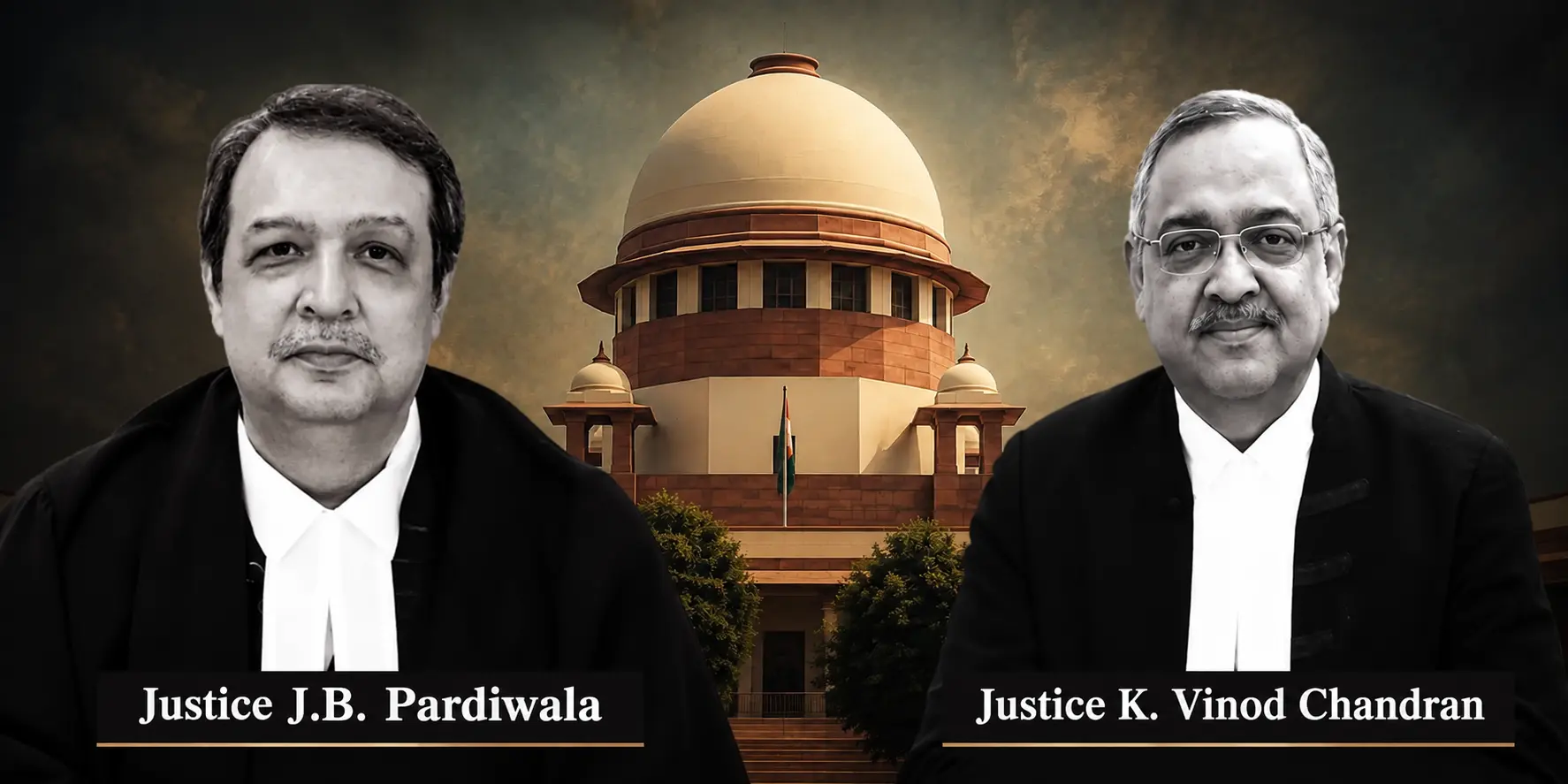
A Bench comprising Justice J.B. Pardiwala and Justice K. Vinod Chandran passed the order in CBI v. Anil Dixit, setting aside the orders that had directed the CBI to produce certain documents at the stage of framing of charges.
The case arose after accused Anil Dixit sought several documents under Section 91 of the Code of Criminal Procedure, 1973, including seizure memos, registers, source information reports, documents seized during investigation but not relied upon in the chargesheet, Building Committee minutes and other records.
The Special Judge, CBI, Ranchi had allowed the application, leading to further proceedings before the High Court. The CBI challenged the orders before the Supreme Court.
The accused had also clarified before the Supreme Court that he was not seeking the source of information received by the CBI or the case diaries.
The Court considered earlier decisions, including State of Orissa v. Debendra Nath Padhi and Sarla Gupta v. Directorate of Enforcement.
The Bench observed that, for the purposes of the present case, it would proceed on the premise that the accused is entitled to documents available with the prosecuting agency for the purpose of shaping his defence. However, the crucial question was at what stage such documents could be sought, depending upon the nature of the documents.
With regard to documents not relied upon in the chargesheet, the CBI had stated that the documents were voluminous but had offered to permit the accused to inspect them.
The Supreme Court accepted this approach and directed that the accused could examine the documents and seek production of particular documents at the appropriate stage, including when the relevant witness is being examined.
Alternatively, during inspection, the accused or an authorised representative could identify the specific documents required. The details would be reduced to writing and signed by both sides, after which the identified documents would be made available to the Trial Court.
The Court also dealt with other categories of documents sought by the accused.
Where the CBI stated that particular records were not available with it, the Court held that such documents could not be produced by the investigating agency.
For certain Building Committee minutes, however, the Court observed that if the documents were available in the voluminous records that the accused was permitted to inspect, their production could be sought at the appropriate stage.
If such documents were not available with the CBI, the accused could seek to procure and prove them in defence, including by resorting to the Right to Information Act, 2005, or by examining an appropriate witness. Their evidentiary value would ultimately be assessed by the Trial Court.
The Court noted that certain registers maintained by the CBI and the source information could not be disclosed. The accused had also withdrawn his request for those materials.
The Supreme Court ultimately directed the Trial Court to proceed in accordance with its directions and set aside the impugned orders to facilitate an expeditious trial.
The appeal was accordingly disposed of.
Case: Central Bureau of Investigation v. Anil Dixit
Citation: 2026 INSC 1064
Arising out of: SLP (Crl.) No. 17158 of 2026
Date: September 25, 2026
Bench: Justice J.B. Pardiwala and Justice K. Vinod Chandran

Representation:-
For Petitioner(s) : Mr. Suryaprakash V. Raju, A.S.G. Mr. Zoheb Hossain, Sr. Adv. Mr. Shreekant Neelappa Terdal, AOR Mr. Annam Venkatesh, Adv. Mr. Samrat Goswami, Adv. Mr. Ishan Kapoor, Adv.
For Respondent(s) : Mr. Arvind Kumar Gupta, Sr. Adv. Mr. Abhiesumat Gupta, Adv. Mr. Shrey Tanwar, Adv. Mr. Ashish Singh, Adv. Mr. Yugansh Mittal, AOR
Website designed, developed and maintained by webexy