
The Supreme Court has held that mere delay in depositing Foreign Travel Tax (FTT) cannot be treated as “failure to pay” the tax, and consequently, penalty under Section 38(3) of the Finance Act, 1979 cannot be imposed automatically merely because the statutory deadline was breached.
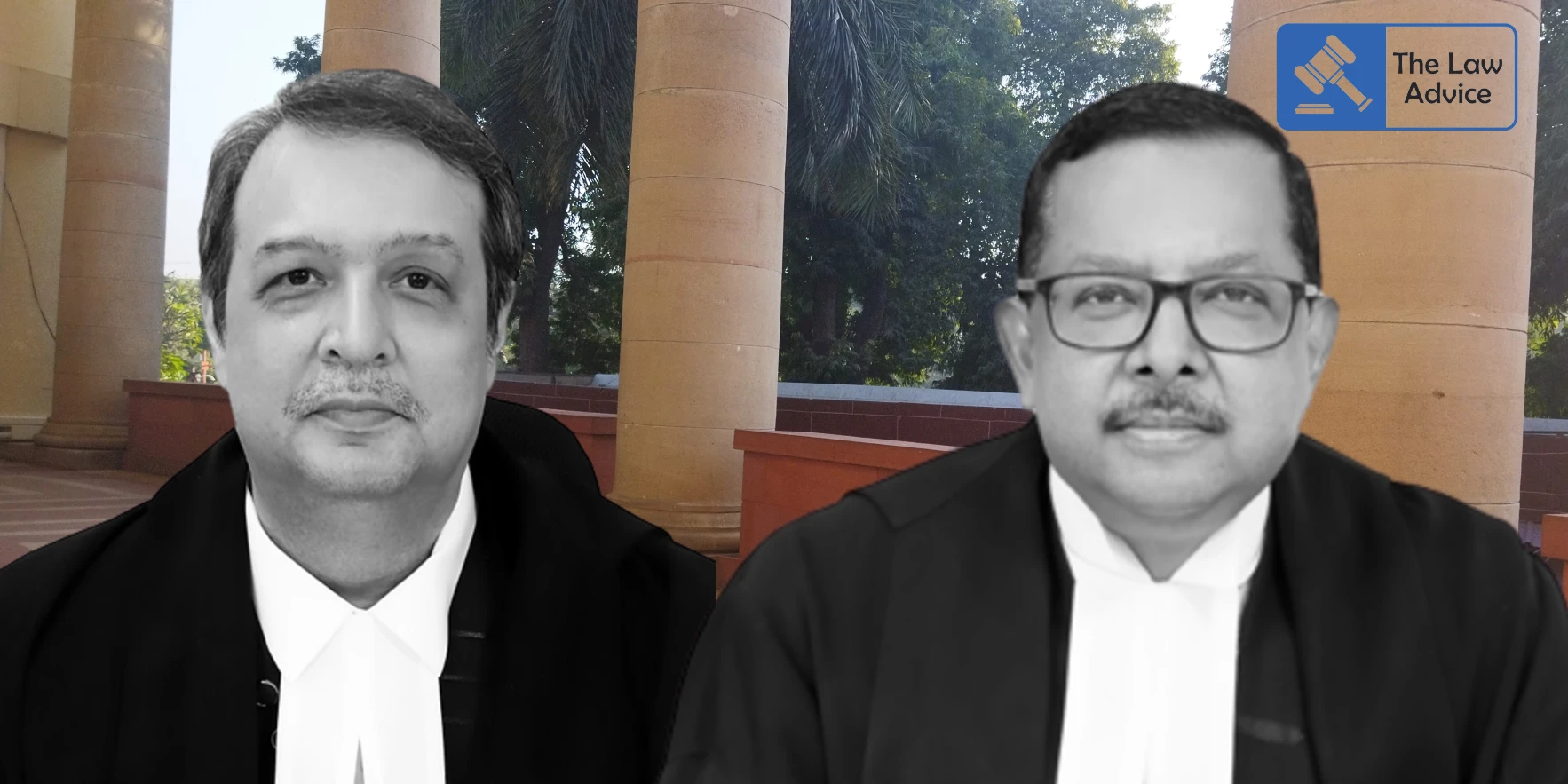
A Bench of Justice J.B. Pardiwala and Justice Ujjwal Bhuyan delivered the ruling while allowing an appeal filed by Saudi Arabian Airlines against the Union of India and other authorities.
The Court set aside the penalty imposed on the airline for six instances of delayed payment of FTT and quashed the orders passed by the Bombay High Court, revisional authority, appellate authority and adjudicating authority.
What was the dispute?
Saudi Arabian Airlines, which was authorised to operate flights to and from India, collected Foreign Travel Tax from passengers travelling abroad and was required to deposit the tax with the Central Government within the prescribed period.
The case concerned six instances of delayed deposit. In five cases, the delay ranged between one and 11 days, even though the demand drafts had been purchased before the respective due dates. The airline attributed the delay to security restrictions.
In another case, there was a delay of 63 days, which the airline explained on the ground that the employee responsible for depositing the demand draft was on emergency leave.
The authorities nevertheless treated the delayed deposits as attracting penalty under Section 38(3) of the Finance Act.
What made the matter more significant was that the original penalty of Rs. 12,000 was subsequently enhanced, after remand, to Rs. 71,29,140 for the six instances.
Supreme Court distinguishes ‘non-payment’ from ‘delayed payment’
The Supreme Court disagreed with the approach adopted by the authorities and the Bombay High Court.
Interpreting Section 38(3), the Court focused on the statutory expression “fails to pay the foreign travel tax” and held that “failure to pay” means non-payment and cannot be equated with delayed payment.
The Court observed that had the legislature intended Section 38(3) to cover delayed payment, it could have used appropriate language to that effect. In fiscal statutes, courts cannot expand the meaning of statutory expressions beyond what the legislature has actually provided.
Accordingly, the Court held that Section 38(3) deals with non-payment of FTT, while delayed payment falls within the framework of Section 38(4) read with Rules 4 and 9 of the Foreign Travel Tax Rules, 1979.
Penalty is not automatic merely because there is a statutory breach
The Court also rejected the proposition that once the prescribed timeline is breached, penalty necessarily follows.
It held that the scheme of the Finance Act and the 1979 Rules contemplates an adjudicatory process. Rule 12 requires a notice setting out the grounds for proposed penalty, an opportunity to submit a representation and a reasonable opportunity of hearing.
Therefore, the authority has discretion to decide whether penalty should actually be imposed. The mere presence of the word “shall” in a penal provision does not, by itself, make the imposition of penalty automatic.
The Court stated that the power to impose a penalty also includes the power not to impose one, depending upon the facts and circumstances of the case.
Collector can condone delay
The Court further pointed out that Rule 4 itself permits the Collector of Customs, on sufficient cause being shown, to allow a carrier additional time beyond the prescribed 30-day period for depositing FTT.
Similarly, Rule 9 permits extension of time for filing monthly returns.
Thus, the statutory timeline is not completely inflexible. If the competent authority is satisfied with the explanation and condones the delay, the question of imposing penalty for that delay would not arise.
Appellant cannot be made worse off for pursuing a legal remedy
The Supreme Court also found fault with the extraordinary enhancement of penalty after Saudi Arabian Airlines challenged the original order.
The Court invoked the principle of “reformatio in peius”, meaning that a person should not be placed in a worse position merely because they exercised a legal remedy.
Referring to earlier decisions, including Jyoti Plastic Works Pvt. Ltd. v. Union of India and Nagarajan v. State of Tamil Nadu, the Court reiterated that an appellant should not become worse off merely by filing an appeal.
Penalty of Rs. 71.29 lakh set aside
Concluding that the penalty imposed on Saudi Arabian Airlines for the six delayed FTT payments could not be sustained, the Supreme Court set aside the penalty and quashed the corresponding orders of the authorities and the Bombay High Court.
The Court also directed that any amount already paid by the airline towards the penalty be refunded with interest at 9% per annum within three months. The bank guarantee furnished by the airline was also directed to be discharged.
The appeal was accordingly allowed with no order as to costs.

Representation:-
For Appellant(s) : Mr. P.V. Dinesh, Sr. Adv. Mr. Shankh Sengupta, Adv. Mr. Samsuddha Majumdar, Adv. Mr. Kartikey Kulshrestha, Adv. Mr. Sujoy Sur, Adv. Mr. Soham Banerjee, Adv. Mr. Shreyash Sharma, Adv. Ms. Anna Oommen, Adv. Mr. Syed Jafar Alam, AOR
For Respondent(s) :Mr. N. Venkataraman, A.S.G. Mr. Gurmeet Singh Makker, AOR Mr. B Sunita Rao, Adv. Mr. Arijit Prasad, Adv. Mr. Udai Khanna, Adv. Mr. Sarthak Karol, Adv. Ms. Neelakshi Bhaduria, Adv.
Website designed, developed and maintained by webexy