
The Supreme Court has directed authorities across States to ensure that no commercial activity is carried out in areas specifically earmarked for residential use, ordering that premises found being used commercially in violation of sanctioned land use should, in the first instance, be sealed.
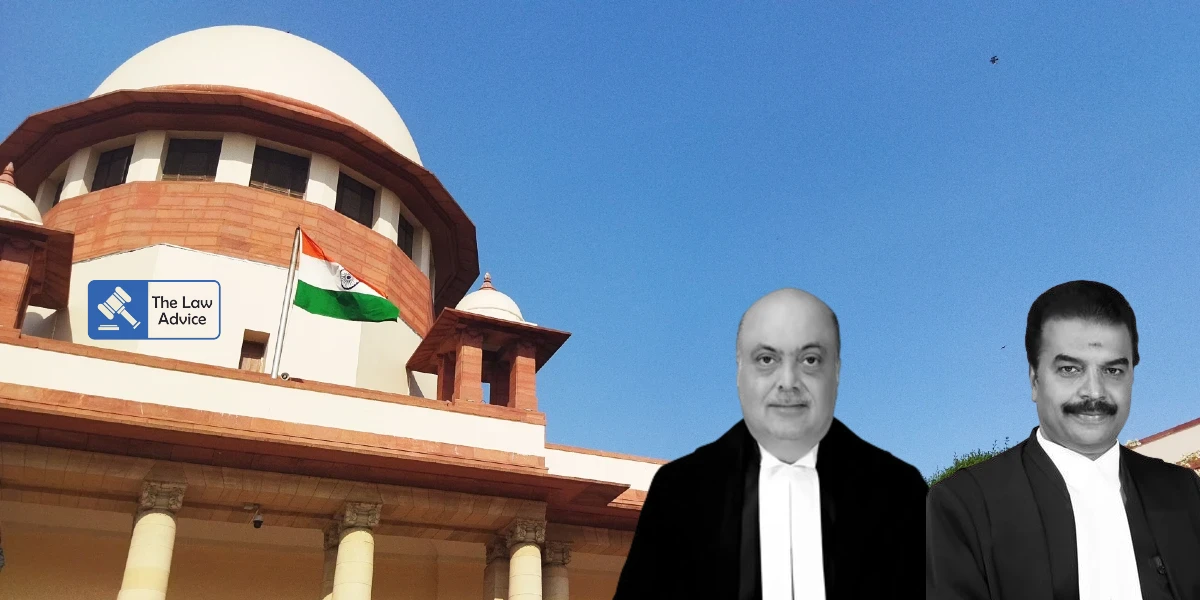
A Bench of Justice Ahsanuddin Amanullah and Justice R. Mahadevan passed a series of directions while hearing proceedings in Loganathan v. State of Tamil Nadu concerning unauthorised construction and use of properties in various States.
The proceedings also saw the Court take serious note of an alleged threat issued to persons assisting the Court in connection with inspections of coaching centres and other premises.
The Court directed authorities to prioritise enforcement against commercial activities being carried out in areas specifically designated for residential use.
The Bench ordered that where permission granted by the State Government is only for residential use, any commercial activity found there should result in the premises being sealed in the first instance.
The Court clarified that in areas where the permissible use is not clearly specified as commercial or residential, the question of mixed use may require separate consideration. For the time being, however, the existing status quo would remain undisturbed, while proceedings on paper could continue.
The Court further made it clear that pendency of a title dispute or other litigation would not prevent authorities from sealing a property if its use violated the purpose for which the land or building had been allotted and the plan approved.
The Supreme Court also clarified that where a structure has been constructed wholly without authorisation or approval from the competent authority, the process of sealing or demolition, as required in accordance with law, can proceed.
At the same time, the Court cautioned authorities against adopting a selective or discriminatory approach while implementing its directions.
It said that if authorities were found to have adopted a “pick-and-choose” approach, the Court would take a strict view of the matter.
An important issue arose after Senior Counsel Rajdeep Rastogi, appearing as an Officer of the Court, informed the Bench that coaching centres had been operating from commercial areas despite designated areas having been earmarked for coaching institutes by the Government and Jaipur Development Authority.
Following the matter being brought before the Court, the authorities had issued notices to such coaching institutes to shift to the designated areas.
Rastogi subsequently informed the Court that he had received four missed calls while returning from the proceedings. A person travelling with him had answered one of the calls and was allegedly threatened with dire consequences.
The incident was reported to the police and an FIR was registered on September 12, 2026.
The Supreme Court observed that an Officer of the Court or anyone assisting the Court must be able to discharge their duties without fear or apprehension. It said it was the duty of the Court to ensure their protection.
Taking note of the matter, the Court directed the Chief Secretary of Rajasthan and the Director General of Police, Rajasthan, to personally appear before it and explain the status of the investigation and the alleged delay on the part of the authorities.
Later in the proceedings, the State of Rajasthan assured the Court that strict action would be taken in the matter within 24 hours.
In view of that assurance, the Court dispensed with the personal appearance of the Chief Secretary and DGP for the time being.
The Court also took serious objection to the conduct of the State of Uttarakhand, which, according to the amicus curiae, had neither entered appearance nor deposited ₹50,000 or filed an affidavit in the proceedings.
The Supreme Court accordingly issued a notice of contempt to the Chief Secretary of Uttarakhand and directed him to remain present on the next date of listing.
The Bench also considered issues concerning the Master Plan for Bhopal.
The Court noted that the Madhya Pradesh Government had decided to withdraw its earlier resolution proposing a committee to examine certain issues relating to the city’s Master Plan.
The Court directed that authorities should, for the present, give priority to preventing commercial activities in areas exclusively earmarked for residential use.
The Court subsequently permitted publication of the draft State Master Plan for Bhopal, while clarifying that objections could be invited but the plan should not be finalised without the Court’s permission.
For determining the legality of properties and constructions, the relevant test would be whether they conform to the existing Master Plan and applicable building bye-laws.
The Court was also informed that local site inspections had been carried out in Delhi and Lucknow, with reports submitted by the amicus curiae and IIT Delhi.
The amicus curiae, however, raised concerns regarding the cooperation extended by the New Delhi Municipal Council during the inspection.
The Additional Solicitor General assured the Court that full cooperation would be provided by the NDMC in future.
The Court directed the authorities and all concerned persons to extend full cooperation to the amicus curiae and provide whatever information or assistance was required.
The Bench specifically cautioned authorities against selective enforcement of its directions.
The Court also took note of allegations that in some places, particularly Bhopal, properties were being sealed and subsequently unsealed within a short period without any intervening development such as a decision by the authority or consideration of a show-cause reply.
The Court directed that its orders must be implemented uniformly and without discrimination.
The matter has been listed for November 23, 2026 at 2:00 PM, with States and authorities directed to file updated status reports one week before the next hearing. The amicus curiae has also been asked to submit a consolidated report.
Case: Loganathan v. State of Tamil Nadu
Proceedings: Miscellaneous Application Diary No. 17103/2026
Bench: Justice Ahsanuddin Amanullah and Justice R. Mahadevan
Order Date: September 22, 2026

Website designed, developed and maintained by webexy