
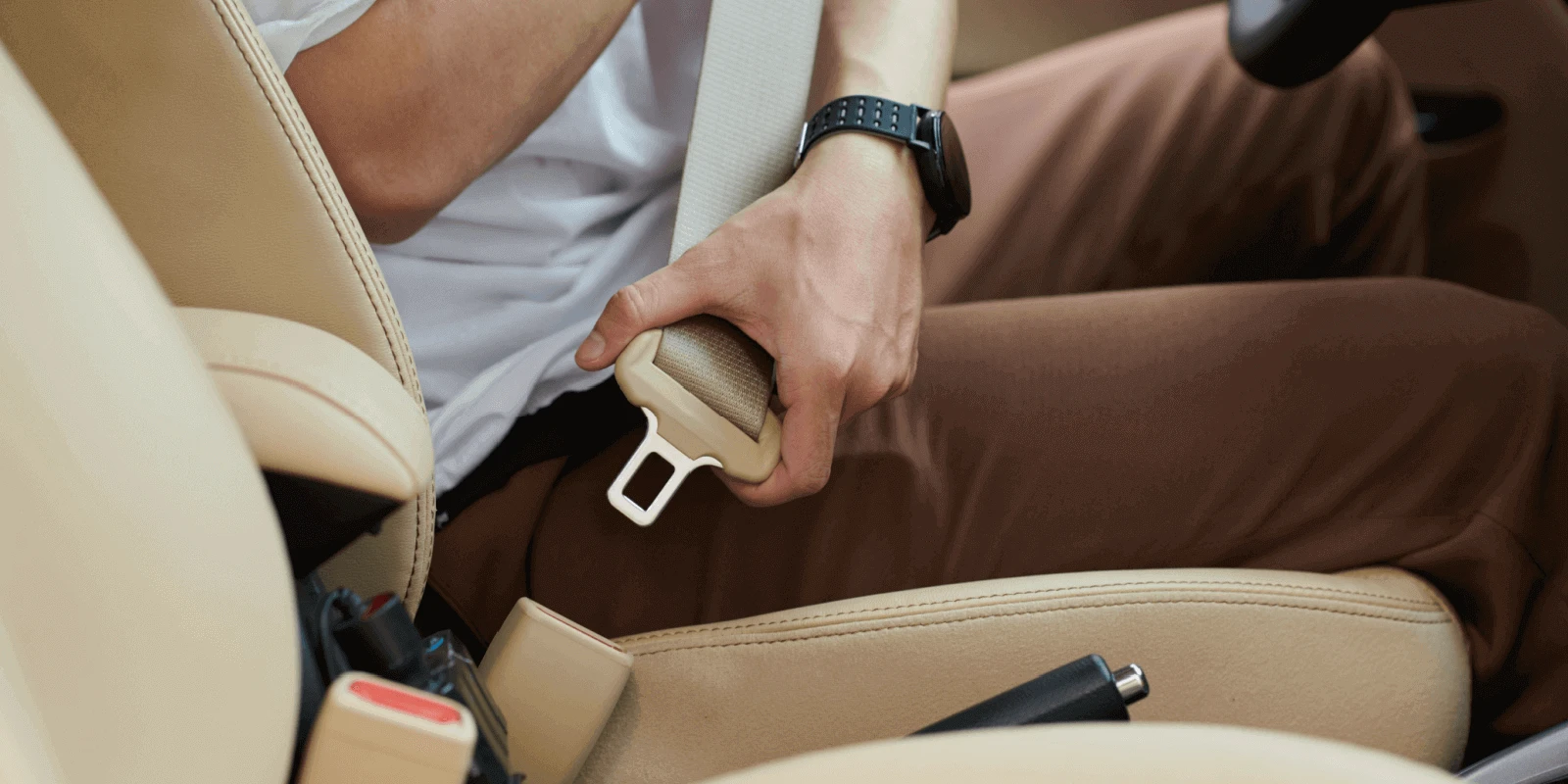
The Supreme Court has disposed of a public interest litigation seeking stricter implementation of mandatory seat belt requirements, child restraint systems and first-aid kits in vehicles, while allowing the petitioner to forward his recommendations to the Ministry of Road Transport and Highways for consideration.
A bench comprising Chief Justice of India Surya Kant, Justice Joymalya Bagchi and Justice V Mohana observed that adequate statutory provisions already exist to ensure compliance with vehicle safety requirements.
The Court said that the primary concern was the enforcement of these provisions rather than the absence of a legal framework.
The bench observed that non-compliance with existing safety laws and failure of authorities to take action against violators essentially concerned law and order and traffic discipline. It added that merely passing a judicial order reiterating the existing mandatory provisions would not assist in their enforcement.
The PIL was filed by Dr Jothydev Kesavadev, described by the Court as an internationally acclaimed diabetic specialist and researcher with more than 300 publications.
The petitioner relied on Section 194B of the Motor Vehicles Act, 1988, which provides penalties for driving without a seat belt and for carrying passengers who are not wearing seat belts. The provision also requires children below the prescribed age to be secured through seat belts or appropriate child restraint systems.
The petitioner also referred to Rule 138(3) of the Central Motor Vehicles Rules, 1989, which requires drivers, front-seat occupants and applicable front-facing rear-seat occupants to wear seat belts while the vehicle is in motion.
It was submitted that despite these legal requirements, seat belt sockets in several vehicles are rendered non-functional through seat covers, removal of receptacles and other modifications. The petitioner further highlighted inadequate compliance by citizens and weak enforcement by authorities, which, according to him, increases the risk of serious injuries and fatalities in road accidents.
The petitioner had earlier submitted a representation to the Union government in February 2026 raising these concerns. He approached the Supreme Court under Article 32 of the Constitution after receiving no response.
While disposing of the petition, the Court noted that the existence of adequate laws mandating safety measures such as seat belt usage was not in dispute. The bench held that the issue primarily concerned compliance with and enforcement of the existing legal provisions.
The Court accordingly granted liberty to the petitioner to forward a copy of his petition to the Ministry of Road Transport and Highways, along with his suggestions and recommendations, for consideration as part of road safety measures.
Case: Jothydev Kesavadev v. Union of India
Citation: 2026 LiveLaw (SC) 938
Website designed, developed and maintained by webexy