
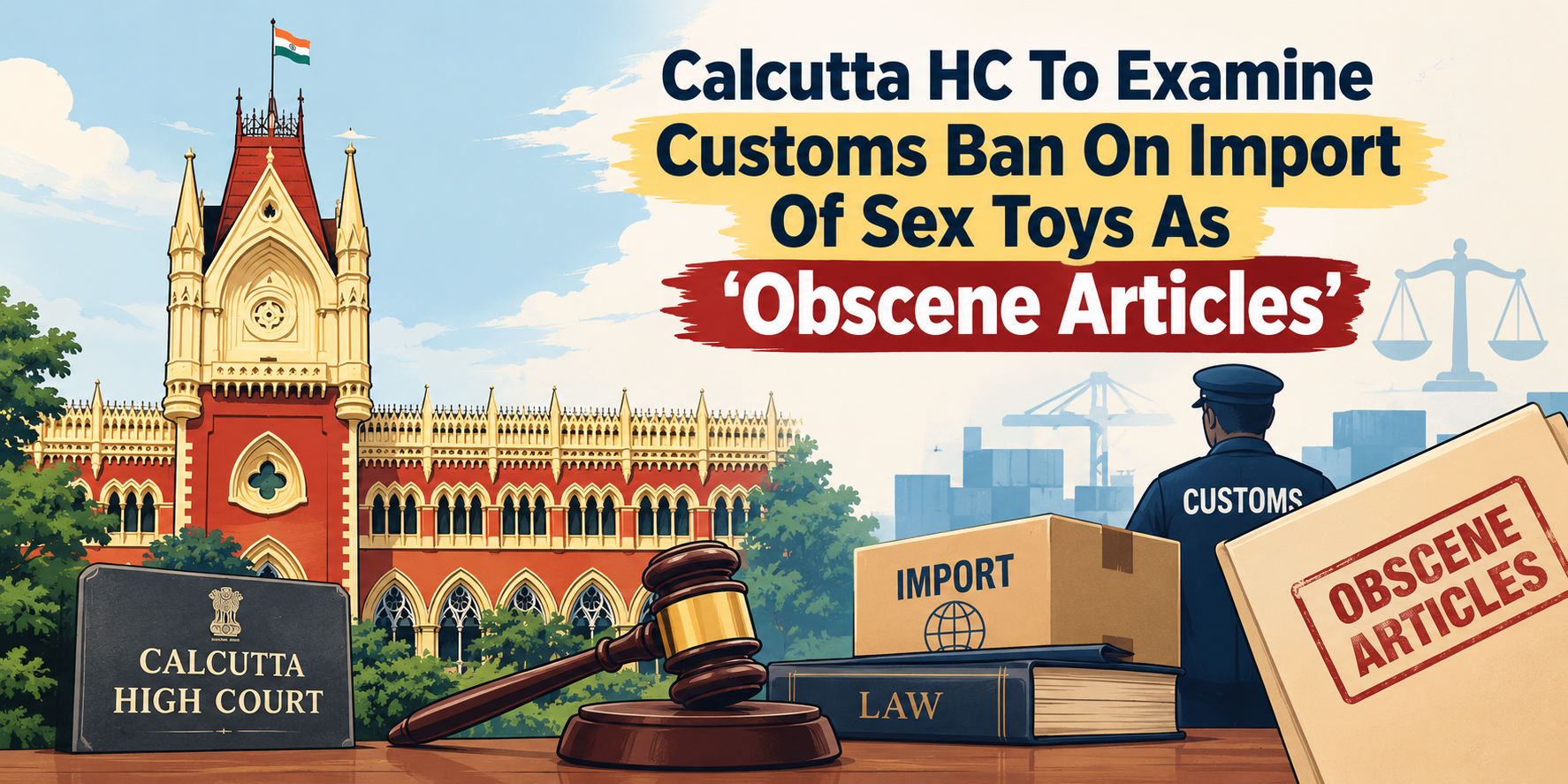
The Calcutta High Court has agreed to examine a petition challenging the Customs Department’s decision to prohibit the import of sex toys into India by classifying them as “obscene articles.”
The benmch of Justice Smita Das Dey observed that the issue required consideration as the Customs authorities appeared to have relied on subjective morality while affecting the importer’s fundamental right to trade.
“When a statutory authority acts completely outside the boundaries of objective law and enters the realm of subjective morality thereby severely affecting a citizen’s fundamental right to trade, the High Court will not shut its doors,” the Court said.
The Court further noted that the case involved alleged inconsistencies in the interpretation of trade regulations by different customs houses, making it a matter requiring judicial consideration. It said the statutory basis for the alleged prohibition and the reliance on Section 111(m) of the Customs Act required examination.
The petition was filed by M/s Pracha Aalloy Pvt. Ltd. challenging the Customs Department’s decision to prohibit its imports of sex toys.
The Customs authorities relied on a 1964 notification that prohibits the import of “any obscene book, pamphlet, paper, drawing, painting, representation, figure or article.”
The petitioner argued that the notification could not be used to classify body massagers or sex toys as prohibited goods under the Customs Act, 1962. It contended that there was no specific statutory provision prohibiting the import of such products.
The petitioner also challenged the Customs Department’s decision to classify the products as “obscene articles” based merely on their alleged intended use.
It further submitted that such products are already widely available in the Indian market, including on major online retail platforms. According to the petitioner, restricting their imports while allowing their sale in the domestic market amounted to discrimination and adversely affected its right to trade.
The Customs Department opposed the petition, arguing that it was not maintainable as the petitioner should have first approached the appropriate Customs authority by filing an appeal under Section 128 of the Customs Act.
The High Court, however, observed that the petition raised a legal issue that warranted consideration under Article 226 of the Constitution.
The matter has been listed for October 9.
The Court directed the respondents to file a short affidavit-in-oppos
Website designed, developed and maintained by webexy