
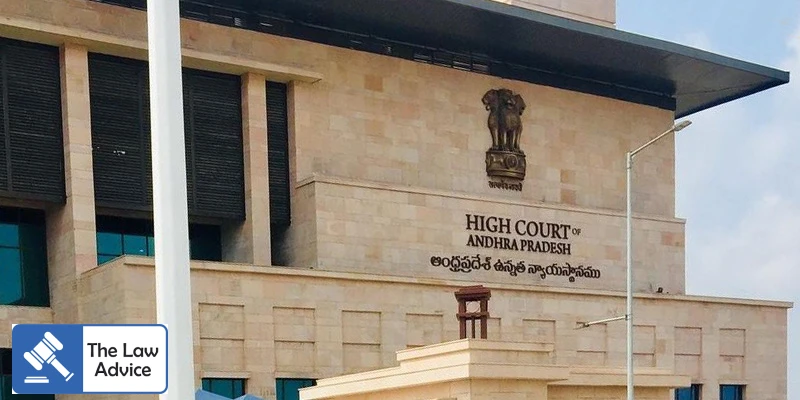
The Andhra Pradesh High Court has acquitted a government employee and a private individual in a two-decade-old bribery case, holding that the Anti-Corruption Bureau (ACB) failed to conduct the investigation in accordance with law.
The Court found that the FIR and key investigation documents were prepared after the trap proceedings, describing the exercise as a "table investigation" that rendered the prosecution unsustainable.
Justice B.V.L.N. Chakravarthi allowed separate criminal appeals filed by the two accused, overturning their 2008 convictions under the Prevention of Corruption Act.
The prosecution had alleged that the first accused, a stockiest in the Civil Supplies Department, demanded a bribe of ₹5,000 from a transport contractor for clearing transport bills. It was further alleged that the money was received by the second accused, a private individual, during a trap laid by the ACB.
However, after examining the evidence, the High Court found significant inconsistencies in the prosecution's version regarding the registration of the FIR and the sequence of events leading to the trap.
The Court noted that under Section 154 of the Code of Criminal Procedure, an FIR is the document that sets the criminal law in motion. In the present case, the material on record suggested that the FIR was prepared only after the trap had already taken place.
Observing that the investigating officer had attempted to portray the FIR as having been registered before the trap despite evidence to the contrary, the Court remarked that the investigation was nothing more than a "table investigation" carried out from the office.
According to the Court, such a course of action violated the mandatory procedure prescribed under the CrPC and seriously prejudiced the rights of the accused. It held that an investigation founded on such an invalid FIR could not form the basis of a lawful conviction.
The Bench also found merit in the defence's explanation regarding the money allegedly recovered during the trap. Evidence showed that the complainant owned only one lorry and routinely hired additional vehicles to transport essential commodities. Several defence witnesses, including vehicle owners and a Civil Supplies employee, supported the claim that the amount paid to the second accused represented transportation charges rather than illegal gratification.
The Court observed that the trial court had failed to consider this evidence and had convicted the accused by overlooking crucial facts on record.
Holding that the investigation had resulted in a "travesty of justice," the High Court set aside the convictions of both accused and directed that any fine amount already deposited be refunded.
Case Title: Y. Ramachandrappa v. State of Andhra Pradesh (and connected appeal)
Website designed, developed and maintained by webexy