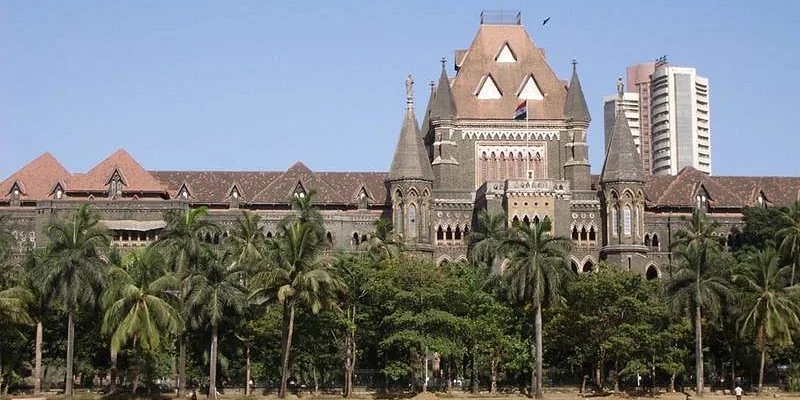
‘No Proof of Surrender’: Bombay HC Orders Return of Shop Occupied Since 1956 Election
In a remarkable tenancy dispute spanning almost seven decades, the Bombay High Court has directed that a shop in Mumbai, which was temporarily handed over to a landlord for use as an election office during the 1956 Assembly elections, be restored to the tenant's family within eight weeks.
The bench of Justice Rajesh S. Patil passed the order in Ramesh Bhaskar v. Umesh Trimbak, holding that there was no evidence to establish that the tenancy had ever been surrendered by the tenant.
The dispute concerns a 250 sq. ft. shop located at Godavari Bhuvan on L.J. Road, Mumbai. The premises had been leased in 1944 to the petitioners' father at a monthly rent of ₹30.
According to the case records, the then landlord, T.R. Naravane, sought temporary use of the shop in 1956 for his election campaign office. Naravane later went on to become a Minister in the Maharashtra government. In a letter dated December 19, 1956, Naravane recorded that the tenant had agreed to allow him to use the premises for three to four months for election-related purposes. The letter further stated that the shop would be returned whenever required by the tenant upon 48 hours' notice.
As an interim arrangement, the tenant was permitted to use a room in a nearby residential building, Shivneri, for accommodating his servant and storing goods. However, despite the conclusion of the election campaign, the shop was never returned.
The tenant subsequently initiated legal proceedings seeking possession of the premises. In 1998, the Small Causes Court ruled in his favour. However, the appellate bench of the same court overturned the decree in 2001 after accepting the landlord's contention that the tenancy had been surrendered.
Challenging that decision, the tenant approached the High Court, which granted interim protection and restrained the landlord from creating third-party rights in the property. The matter remained pending for nearly 25 years before the High Court delivered its final judgment on June 8.
Setting aside the appellate court's ruling, Justice Patil restored the 1998 trial court decree and concluded that the finding regarding surrender of tenancy was unsupported by any documentary evidence. The Court also noted that rent receipts continued to be issued in respect of the shop even after 1956.
"There is no such document on record to suggest that there was surrender of tenancy," the Court observed.
Rejecting the landlord's argument that the tenant had exchanged the shop for a room in the residential building, the Court remarked that no reasonable person would voluntarily give up a commercially valuable roadside shop for a room on the second floor of a residential property situated on an interior road.
"Nobody would surrender a shop premises for one room from a flat on a second floor from main road to an interior road," the judgment stated.
The Court further noted that Naravane was a well-educated doctor who later entered politics and became a Minister, making it unlikely that the arrangement was informal or undocumented.
Emphasising that a tenant can be deprived of possession only through a valid eviction decree or a lawful surrender of tenancy, the High Court found that neither circumstance existed in the present case. Consequently, it ordered restoration of possession of the shop to the tenant's family within eight weeks.
Senior Advocate Virendra Tulzapurkar, along with Advocates Y.S. Bhate and Viraaj Y. Bhate, appeared for the petitioners. The respondents were represented by Advocates Pradeep Thorat, Drupad Patil, Hemang Raythatha, Sunil Gangan, Swapnil Shikhare and Manav Chetwani, instructed by RMG Law Associates.