
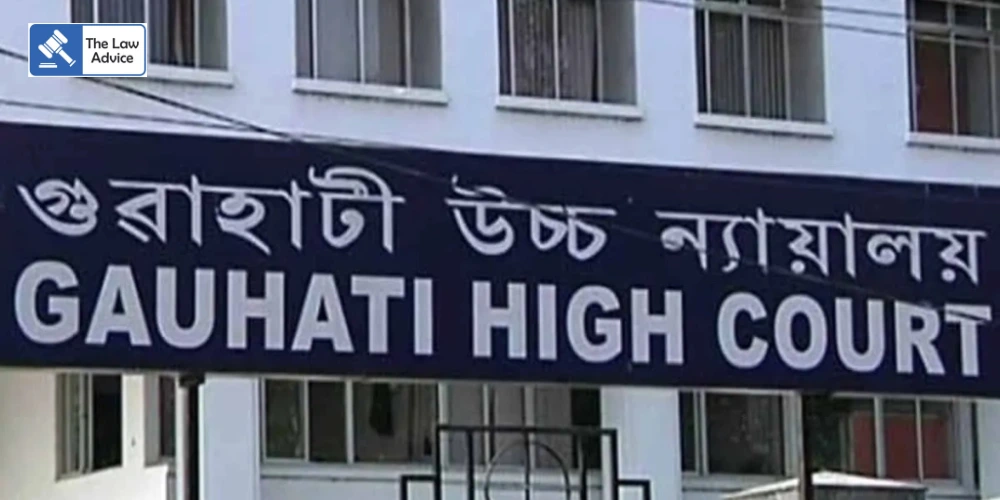
The Gauhati High Court has held that litigants cannot repeatedly seek adjournments during the course of a trial and subsequently attribute the delay to their lawyers in an attempt to revive proceedings.
The Court observed that while procedural delays may be condoned in deserving cases, such discretion cannot be exercised mechanically where a party has consistently failed to act diligently.
Justice Yarenjungla Longkumer made the observations while dismissing a petition challenging a trial court's decision to close the plaintiffs' evidence in a title suit after they failed to produce their evidence despite being granted 11 opportunities over nearly two years.
The dispute arose from a title suit instituted by Sayed Maqsud Ahmed, who sought a declaration that a sale deed executed in favour of one of his sons had been obtained by taking advantage of his poor health and mental condition. Following Ahmed's death in 2021, his wife, son and daughter were brought on record as plaintiffs.
During the proceedings, the trial court repeatedly granted time to the plaintiffs to file their evidence. However, after repeated defaults, it closed their evidence on September 21, 2024. An application seeking recall of that order was also rejected, prompting the plaintiffs to approach the High Court.
Before the High Court, the plaintiffs contended that they had engaged a new advocate after learning that their previous counsel had failed to file the evidence. They claimed they had believed the earlier lawyer was diligently conducting the case and argued that the delay was neither deliberate nor intentional. They also relied on the advanced age and medical condition of some of the plaintiffs, urging the Court to permit them to lead evidence on payment of costs.
The defendant opposed the plea, pointing out that the plaintiffs had already been granted numerous opportunities by the trial court and that the suit, instituted in 2019, had reached the stage of final arguments. Reopening the evidence at that stage, it was argued, would only prolong the litigation.
Rejecting the plea, the High Court observed that although courts possess the discretion to condone procedural lapses in appropriate cases, such discretion must be exercised cautiously where repeated adjournments have already been granted.
The Court emphasised that the conduct of the litigant is a significant factor while considering such requests.
"This Court has to consider the conduct of the plaintiffs/petitioners and to see whether there is negligence on their part or abuse of the process or deliberate attempt to prolong the suit. Each case has to be decided on its own merits," Justice Longkumer observed.
The Court found that the plaintiffs had failed to establish any exceptional circumstance explaining why they could not file their evidence despite receiving repeated opportunities over nearly two years.
"It is surprising to note that till the year 2024, the evidence-in-chief of the PWs was yet to be filed even after the court granted 11 adjournments," the Court remarked.
Observing that allowing the petition at such a late stage would only delay the disposal of a suit pending since 2019, the High Court held that no interference with the trial court's orders was warranted and dismissed the petition.
Case Title: Sayed Maqsud Ahmed v. Khurshid Ali Ahmed
Website designed, developed and maintained by webexy