
The Supreme Court has held that a Civil Court dealing with a plaint under Section 92 of the Code of Civil Procedure (CPC) cannot pass protective or preservatory interim orders while an application seeking leave to institute the suit is still pending.
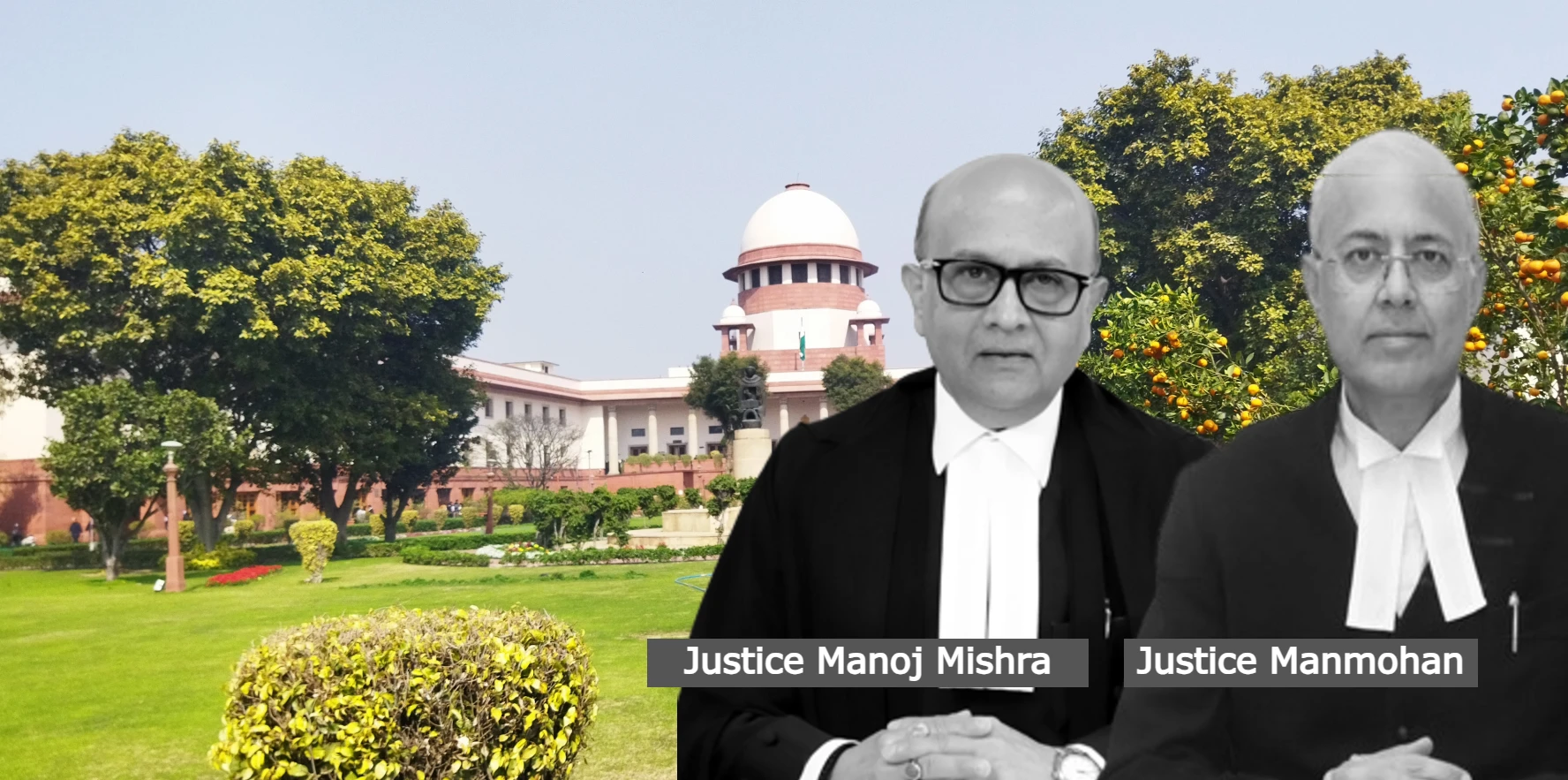
A Bench comprising Justice Manoj Misra and Justice Manmohan delivered the judgment in S. Panchalingu & Ors. v. People's Education Trust (R) & Ors., arising from SLP (C) Nos. 25577-25579 of 2025. The judgment was pronounced on September 18, 2026.
The case concerned the question whether a Civil Court, after receiving a plaint under Section 92 CPC along with an application seeking leave to institute the suit, could pass interim orders to protect or preserve trust property before deciding the leave application. The issue had resulted in conflicting views among different High Courts.
The Karnataka High Court had held that a Section 92 suit remains "stillborn" in the absence of leave and that the Court therefore lacks jurisdiction to pass interlocutory orders before granting such leave.
The Supreme Court explained that Section 92 CPC deals with representative suits concerning alleged breaches of public charitable or religious trusts. Two or more persons interested in such a trust can institute a suit only after obtaining leave of the Court. The Court described the requirement of leave as a mandatory pre-condition to institution of the suit.
The Court observed that Section 92 serves two purposes: it enables persons interested in a public trust to seek judicial protection against mismanagement, while also protecting public trusts and trustees from vexatious litigation. The provision therefore operates as both a "protective shield" and a "remedial sword."
The Supreme Court rejected the argument that a receiver could be appointed under Section 94 read with Order XL Rule 1 CPC before the Court grants leave under Section 92.
It held that supplemental proceedings under Section 94 necessarily presuppose the existence of an underlying proceeding. Since a Section 92 action does not mature into a suit until leave is granted, an application for appointment of a receiver cannot be maintained at that stage.
The Court also held that Section 141 CPC cannot be invoked to override the safeguards specifically incorporated into Section 92.
The Bench further rejected reliance on the Civil Court's inherent powers under Section 151 CPC to pass interim orders before leave is granted.
The Court held that inherent powers cannot be exercised in conflict with express provisions of the CPC. Since Section 92 creates a specific statutory safeguard requiring leave before institution of the suit, Section 151 cannot be used to bypass that requirement.
At the same time, the Supreme Court recognized that circumstances may arise where urgent interim protection is necessary to safeguard public charitable property.
The Court held that where compelling circumstances exist, the Court may dispense with notice before granting leave, provided that cogent reasons are recorded in writing. It emphasized that such power must be exercised with utmost care, caution and circumspection.
Answering the substantial question of law, the Supreme Court held:
A Civil Court seized of a plaint under Section 92 CPC along with an application seeking leave to institute the suit is not empowered to pass protective or preservatory interim orders while the leave application is pending.
However, in cases involving compelling urgency, the Court may dispense with prior notice before granting leave, provided reasons are recorded in writing.
The appeals were accordingly dismissed.

Representation:-
For Petitioner(s) :Dr. Aditya Sondhi, Sr. Adv. Mr. N. Sai Vinod, AOR Ms. Kanu Garg, Adv. Mr. Anubhav Kumar, Adv.
For Respondent(s) :Mr. Raghavendra S. Srivatsa, Sr. Adv. Mr. Amit Pai, Adv. Ms. Pankhuri Bhardwaj, AOR Mr. Tathagata Dutta, Adv. Mr. Kushal Dube, Adv. Mr. Rahat Bansal, Adv. Mr. Amit Pai, AOR Mr. Rahat Bansal, Adv. Mr. Anoop Haranhalli, Adv. Ms. Bhavana Duhoon, Adv. Ms. Komal Mundhra, Adv. Mr. Saurabh Agrawal, Adv. Mr. Naveen Nagarjuna, AOR Mr. Vinayak Batta,
Website designed, developed and maintained by webexy