
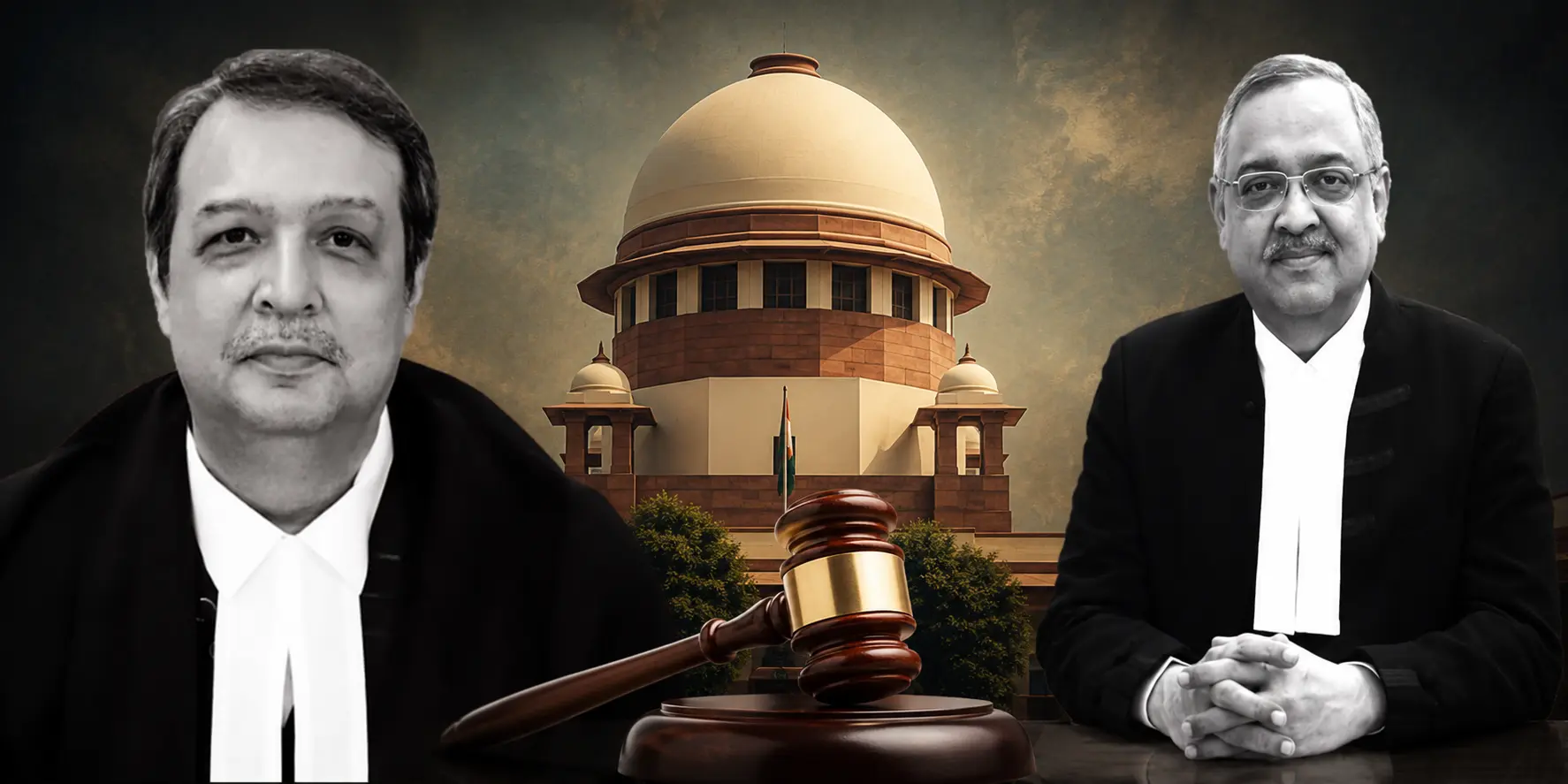
The Supreme Court has struck down Rules 18A and 18B of the Maharashtra Poisons Rules, 1972, holding that the restrictions imposed on the purchase, sale and possession of methanol violated Articles 14 and 19(1)(g) of the Constitution.
A Bench comprising Justice J.B. Pardiwala and Justice K. Vinod Chandran delivered the judgment on September 18, 2026, in M/s Balaji Formalin Pvt. Ltd. & Anr. v. Union of India & Anr. and connected matters.
The petitions challenged a 2011 notification issued by the Maharashtra Government that inserted Rules 18A and 18B into the Maharashtra Poisons Rules.
Under Rule 18A, a purchaser seeking methanol was required to hold a Form A licence, while methanol sold to non-drug manufacturers had to be mixed with specified quantities of a colourant and bitterant before sale. Rule 18B provided for confiscation of methanol found in possession without a valid Form A licence.
The rules were introduced following a 1991 hooch tragedy in Mumbai in which around 93 people died after consuming spurious liquor containing methanol.
The Supreme Court acknowledged the State's legitimate objective of preventing deaths caused by methanol-adulterated liquor. However, it held that the regulatory measures adopted must also satisfy the requirements of reasonableness and proportionality.
The Court found that Rule 18A(1), which effectively restricted manufacturers and industrial consumers from purchasing methanol unless they possessed a Form A licence, was disproportionate. It observed that the requirement failed to establish a sufficient connection between verification of the licence and prevention of methanol diversion for illicit liquor.
The Court also examined Rule 18A(2), which required one gram of methylene carmine and four grams of denatonium saccharide to be added to every 100 litres of methanol sold to non-drug manufacturers.
The Court noted that several industries had demonstrated that the additives could affect their manufacturing processes and the quality or marketability of their final products. The judgment recorded concerns involving industries producing chemicals, pharmaceutical inputs, formaldehyde and laboratory-grade methanol.
The Court held that the requirement did not adequately address the core problems of diversion and pilferage of methanol, while imposing a continuing burden on legitimate industries. It therefore found that the rule lacked a reasonable and proximate nexus with its intended objective.
Applying the proportionality test, the Court observed that the State had failed to demonstrate that less restrictive but equally effective alternatives were unavailable. It noted that existing safeguards under the Maharashtra Poisons Rules, if properly implemented, could better address pilferage and diversion.
The Court further held that the continuing burden imposed on industries—including loss of yield, impact on catalysts and equipment, increased power consumption and other manufacturing difficulties—was substantial, while the claimed benefit of identifying methanol was only a possibility.
The Court also made a series of suggestions for preventing hooch tragedies, including stricter monitoring of State borders, coordination among police, excise and other departments, scrutiny of industrial units, periodic verification of licences, monitoring of methanol consumption and stock, dedicated transport containers, tamper-evident seals and stronger emergency healthcare arrangements.
The Court directed that the existing regulatory framework relating to methanol should be comprehensively reviewed and emphasized effective implementation of laws aimed at preventing illegal diversion and manufacture of spurious liquor.
The Supreme Court ultimately held that the impugned rules were violative of Articles 14 and 19(1)(g) and allowed the writ petitions. The Registry was directed to forward a copy of the judgment to all High Courts and the Chief Secretaries of all States.

Representation:-
For Petitioner(s) : Mr. Balbir Singh, Sr. Adv. Mr. Mohan Jayakar, Adv. Mr. Sandeep Sudhakar Deshmukh, AOR Mr. Abhay Dhadiwal, Adv. Mr. Nikhil Wable, Adv. Mr. Nishant Sharma, Adv. Mr. Ankur Savadikar, Adv. Mr. Kartik Sharma, Adv.
For Respondent(s) : Mr. Anand Dilip Landge, Adv. Mr. Siddharth Dharmadhikari, Adv. Mr. Aaditya Aniruddha Pande, AOR Mr. Shrirang B. Varma, Adv.
Website designed, developed and maintained by webexy