
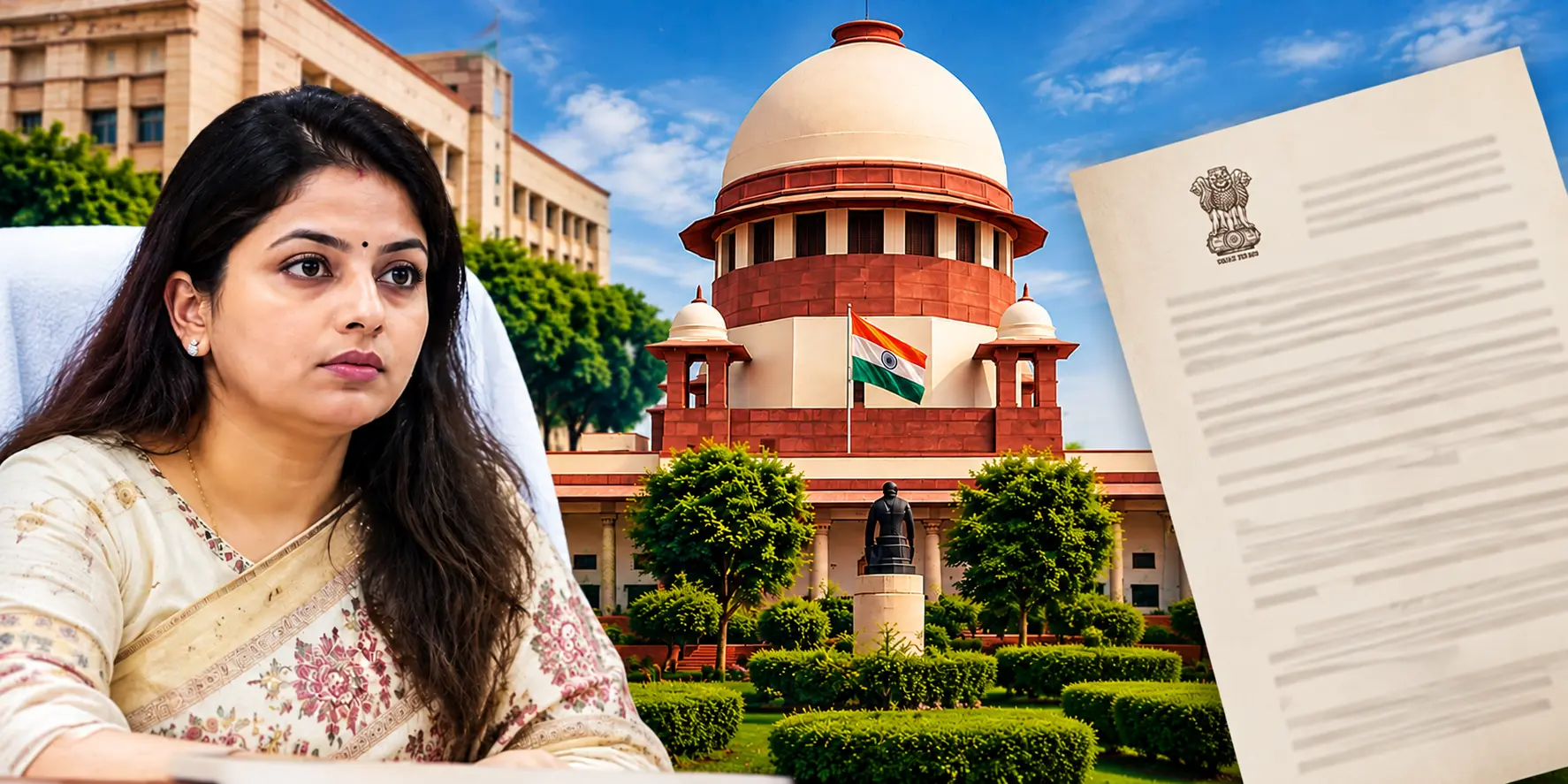
Questions have been raised over the listing of the petition filed by Gautam Buddh Nagar (Noida) District Magistrate Medha Roopam before the Supreme Court, challenging the Allahabad High Court judgment concerning the detention of Delhi University student Akriti Chaudhary under the National Security Act (NSA).
The controversy comes against the backdrop of the Supreme Court's proceedings on the DM's plea seeking interim relief against the Allahabad High Court's judgment. The High Court had quashed Chaudhary's NSA detention and directed payment of ₹5 lakh compensation, with the amount to be recovered from the salary of the District Magistrate and other officials.
Medha Roopam approached the Supreme Court challenging the adverse observations and personal liability imposed upon her by the Allahabad High Court. A connected petition was also filed by the State of Uttar Pradesh challenging the High Court's order.
The Supreme Court, comprising Justice Satish Chandra Sharma and Justice N.K. Singh, heard the matters on September 23. During the hearing, Solicitor General Tushar Mehta, appearing for the District Magistrate, argued that the strictures against the officer were unwarranted.
Senior Advocate Mukul Rohatgi, appearing for the State, argued that the District Magistrate was only one part of the statutory detention process. According to the submissions reported by LiveLaw, the detention proposal originated with the SHO and was subsequently approved at various levels, including by the advisory committee, State Government and Union Government.
The Allahabad High Court had earlier held that the continued detention of Akriti Chaudhary under the NSA violated her fundamental right under Article 21. It found that the detention order and grounds lacked sufficient material and had been passed without proper application of mind.
The High Court had also made strong observations concerning the manner in which the District Magistrate exercised the power of preventive detention and directed recovery of ₹5 lakh compensation from the salary of the officials held responsible.
On September 23, the Supreme Court initially reserved its order on interim relief after hearing the DM and the State.
Later, the Court passed an interim order staying the operation of the impugned judgment, particularly paragraphs 27 to 33, which contained the adverse observations against the District Magistrate and the direction relating to compensation. The respondent student was permitted to file a counter-affidavit.
The Supreme Court's interim order does not finally decide the merits of the dispute. The matter will be considered further after responses are filed.
Case: Medha Roopam v. Akriti Chaudhary & Ors.
Diary No.: 56202/2026
Bench: Justice Satish Chandra Sharma and Justice N.K. Singh.
Website designed, developed and maintained by webexy