
The Delhi High Court has raised serious concerns over the practice of unilateral appointment of sole arbitrators by banks after it found that one arbitrator, Vikrant Bhardwaj, had handled as many as 4,155 arbitration proceedings involving Axis Bank over a period of four to five years.
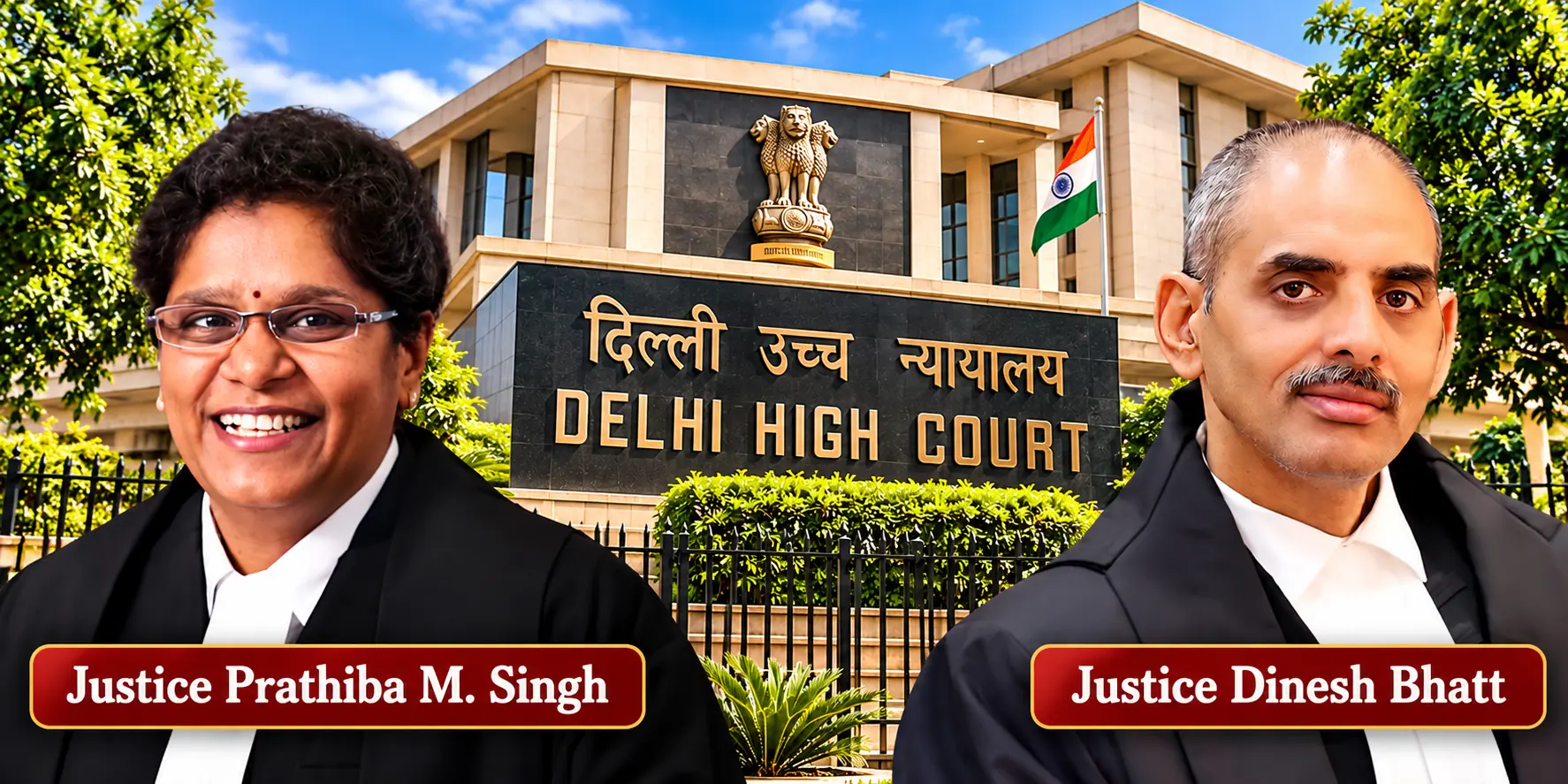
A Division Bench of Justice Prathiba M. Singh and Justice Dinesh Bhatt described the disclosure as the “tip of the iceberg” and questioned how such repeated appointments could be consistent with the requirement of neutrality and impartiality in arbitration.
The Court's concerns deepened after Axis Bank disclosed that approximately 76,000 arbitral awards had been passed pan-India by sole arbitrators who had been unilaterally appointed in disputes involving the bank.
The Bench observed that repeated appointment of the same arbitrators by a single party in thousands of matters could give rise to justifiable doubts regarding their independence and impartiality.
The Court observed:
“handling thousands of the arbitrations by the very same arbitrator appointed by one single party would give rise to justifiable doubts as to independence and impartiality.”
The Court further emphasised that neutrality lies at the core of the arbitral process.
The disclosure regarding Vikrant Bhardwaj came after the High Court directed Axis Bank to provide details concerning the number of arbitrations handled by him on behalf of the bank.
The affidavit filed by Axis Bank revealed that Bhardwaj had acted as arbitrator in 4,155 cases involving Axis Bank during a period of approximately four to five years.
The Court termed this the “most shocking aspect” emerging from the bank's affidavit and directed Axis Bank to explain how such a situation was permitted.
Axis Bank informed the Court that it had discontinued the practice of unilateral appointment of arbitrators, submitting that no such appointment had been made by the bank since 2023.
The bank also conceded that, in light of Supreme Court rulings concerning neutrality in arbitral appointments, awards arising from unilateral appointments would be void ab initio.
The bank further informed the Court that approximately 65% of the 4,155 matters handled by Bhardwaj had been settled, while execution petitions had not been filed in around 1,264 cases.
The High Court also directed the Reserve Bank of India (RBI), as the sector regulator, to caution banks and financial institutions against unilateral appointments of arbitrators.
The Court said the RBI should consider whether remedial measures or appropriate guidance were required for other banks and financial institutions concerning such appointments.
The proceedings arose from a challenge by Shikha Ghosh to an arbitral award passed in favour of Axis Bank.
Axis Bank had sanctioned a loan of approximately ₹16.66 lakh to Ghosh in 2019 and subsequently initiated arbitration alleging default in repayment.
Ghosh contended that she had not been properly served in the arbitration proceedings and that the award had been passed without her knowledge.
As far as the present dispute was concerned, the High Court declared the May 26, 2023 arbitral award unenforceable.
However, the Court permitted Axis Bank to initiate fresh recovery proceedings in accordance with law.
The High Court observed that banks, being custodians of public money, cannot adopt remedies contrary to law for recovery of loans.
At the same time, the Court noted that borrowers who have defaulted cannot be permitted to escape their repayment obligations.
The Bench therefore directed Axis Bank to disclose the course of action it proposed to take regarding awards passed by arbitrators who had been unilaterally appointed.
Both Axis Bank and the RBI have been directed to file their respective affidavits by November 16.
The matter has been listed for further hearing on November 17, 2026.
Case: Shikha Ghosh v. Axis Bank
Court: Delhi High Court
Bench: Justice Prathiba M. Singh and Justice Dinesh Bhatt
Website designed, developed and maintained by webexy