
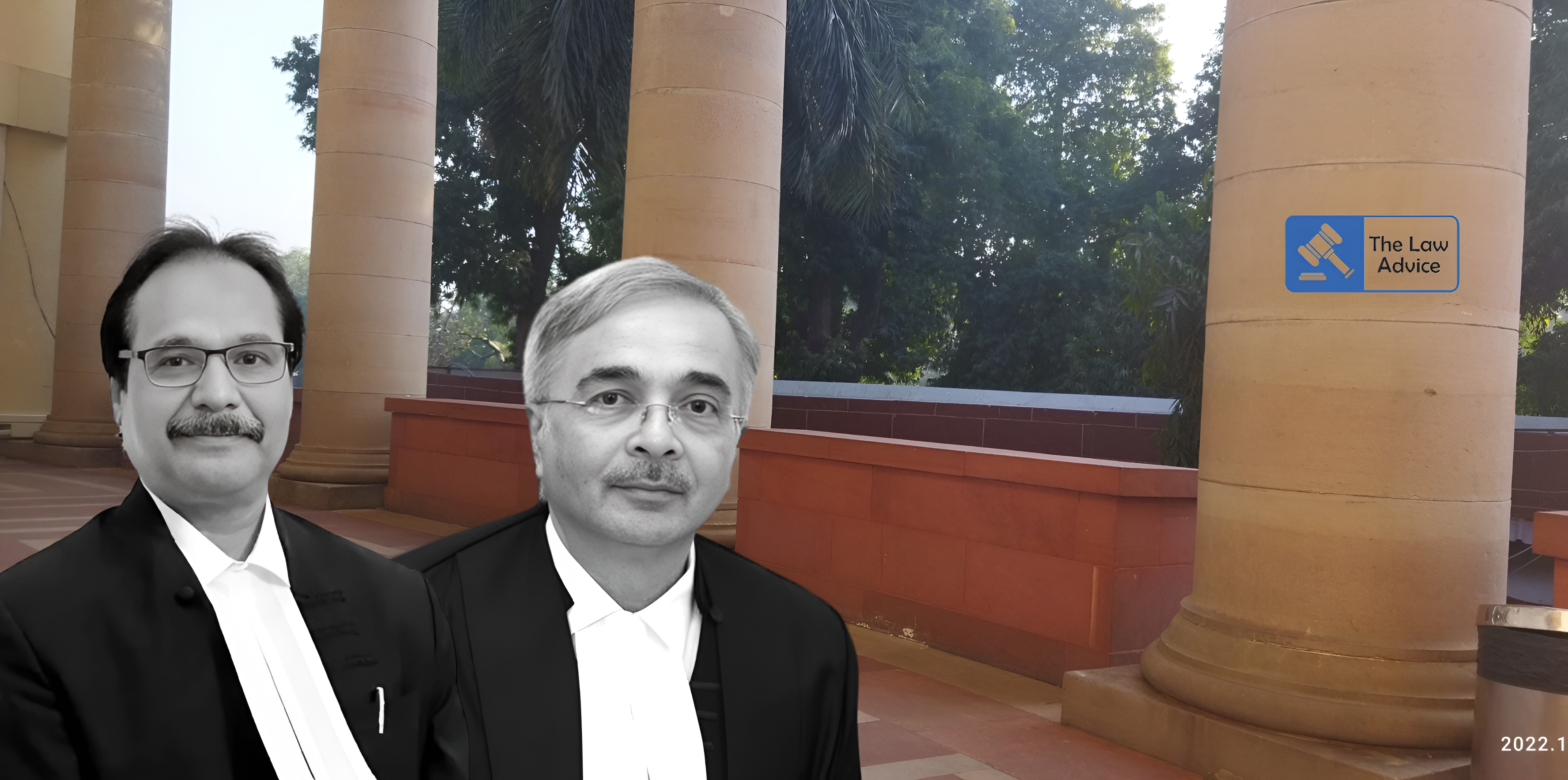
The Supreme Court has set aside the orders of the Uttarakhand High Court and consolidation authorities, restoring the rights of purchasers under a 1957 registered sale deed and holding that a transfer allegedly made in violation of Section 154 of the Uttar Pradesh Zamindari Abolition and Land Reforms Act, 1950 was not void but merely voidable at the instance of the Gaon Sabha.
A Bench comprising Justices Prashant Kumar Mishra and N.V. Anjaria allowed the appeal filed by the legal heirs of Sarafat Ali, directing that their names be recorded in the revenue records.
The dispute concerned agricultural land in Haridwar purchased through a registered sale deed dated June 4, 1957. Although the purchasers claimed possession since the date of purchase, their title was questioned during consolidation proceedings initiated in the village in 1991.
The Consolidation Officer, appellate authority, revisional authority, and subsequently the Uttarakhand High Court rejected the purchasers' claim, holding that the sale deed was invalid as it violated Section 154 of the U.P. Zamindari Abolition and Land Reforms Act and that its execution had not been satisfactorily proved.
The Supreme Court disagreed with the findings of the authorities below and clarified that under the legal framework existing in 1957, a transfer made in violation of Section 154 was not automatically void.
Relying on the earlier decision in Kripashanker v. Director of Consolidation, the Court observed that the consequence of such a violation under the then-existing Section 163 was merely that the transferee could be ejected through a suit filed by the Gaon Sabha.
The Court emphasized that no such proceedings were ever initiated within the prescribed limitation period and therefore the sale deed could not be treated as void.
The respondents argued that later amendments to the statute, which rendered such transfers void and vested the land in the State, should apply.
Rejecting the contention, the Court held that the amendments introduced in 1981 were substantive in nature and could not retrospectively invalidate transactions that were governed by the earlier legal regime.
The Bench noted that retrospective application would disturb accrued rights and create legal inconsistencies within the statutory framework.
The Court also criticized the consolidation authorities for doubting the sale deed based on discrepancies concerning the description of an attesting witness.
It observed that the sale deed was a registered document and therefore carried a strong presumption of genuineness and due execution. Minor inconsistencies regarding the residence details of a witness, especially when testimony was recorded nearly four decades after execution of the document, could not justify rejecting the transaction.
The Court further pointed out that attestation is not a mandatory requirement for the validity of a sale deed and that there were no allegations of forgery, fraud, coercion, or impersonation.
Reiterating settled law, the Court held that consolidation authorities may disregard documents that are void ab initio, but they cannot ignore documents that are merely voidable unless they have been cancelled by a competent civil court.
Since the sale deed in the present case had never been cancelled, it continued to remain legally operative and binding.
Allowing the appeal, the Supreme Court held that the findings of the consolidation authorities and the High Court were legally unsustainable. The Court consequently set aside the impugned orders and directed that the appellants' names be entered in the revenue records.
Sarafat Ali (Deceased) Through LRs & Ors. v. Deputy Director of Consolidation, Haridwar & Ors.
Civil Appeal No. 8705 of 2026
Decided on: June 23, 2026.

Representation:-
For Petitioner(s) : Mr. Jayant Bhushan, Sr. Adv., Mr. S.R. Singh, Sr. Adv., Mr. Nagendra Singh, Adv., Mr. Surjeet Singh, Adv., Mr. Yojit Mehra, Adv., Mr. Amartya Bhushan, Adv., Mr. Ram Shiromani Yadav, Adv., Mr. Naman Raj Singh, Adv., Mr. Parth Singh, Adv., Dr. Sushil Balwada, AOR
For Respondent(s) : Mr. Akshat Kumar, AOR, Ms. Anubha Dhulia, Adv., Ms. Anjali Saxena, Adv., Ms. Neerja, Adv., Dr. Amardeep Gaur, Adv., M/s V. Maheshwari & Co., AOR, Mr. Naved Anwar, Adv., Mr. Parmanand Gaur, AOR, Mr. Kshitij Mudgal, AOR, Mr. Vikalp Mudgal, Adv., Mr. Amit Jay Singh, Adv., Mr. Ansh Mittal, Adv.
Website designed, developed and maintained by webexy