
In a significant judgment concerning child custody, visitation rights, and cases involving allegations under the POCSO Act, the Supreme Court has held that repeated and multi-layered psychological evaluations of a child should ordinarily be avoided, particularly when the child is an alleged victim of sexual abuse.
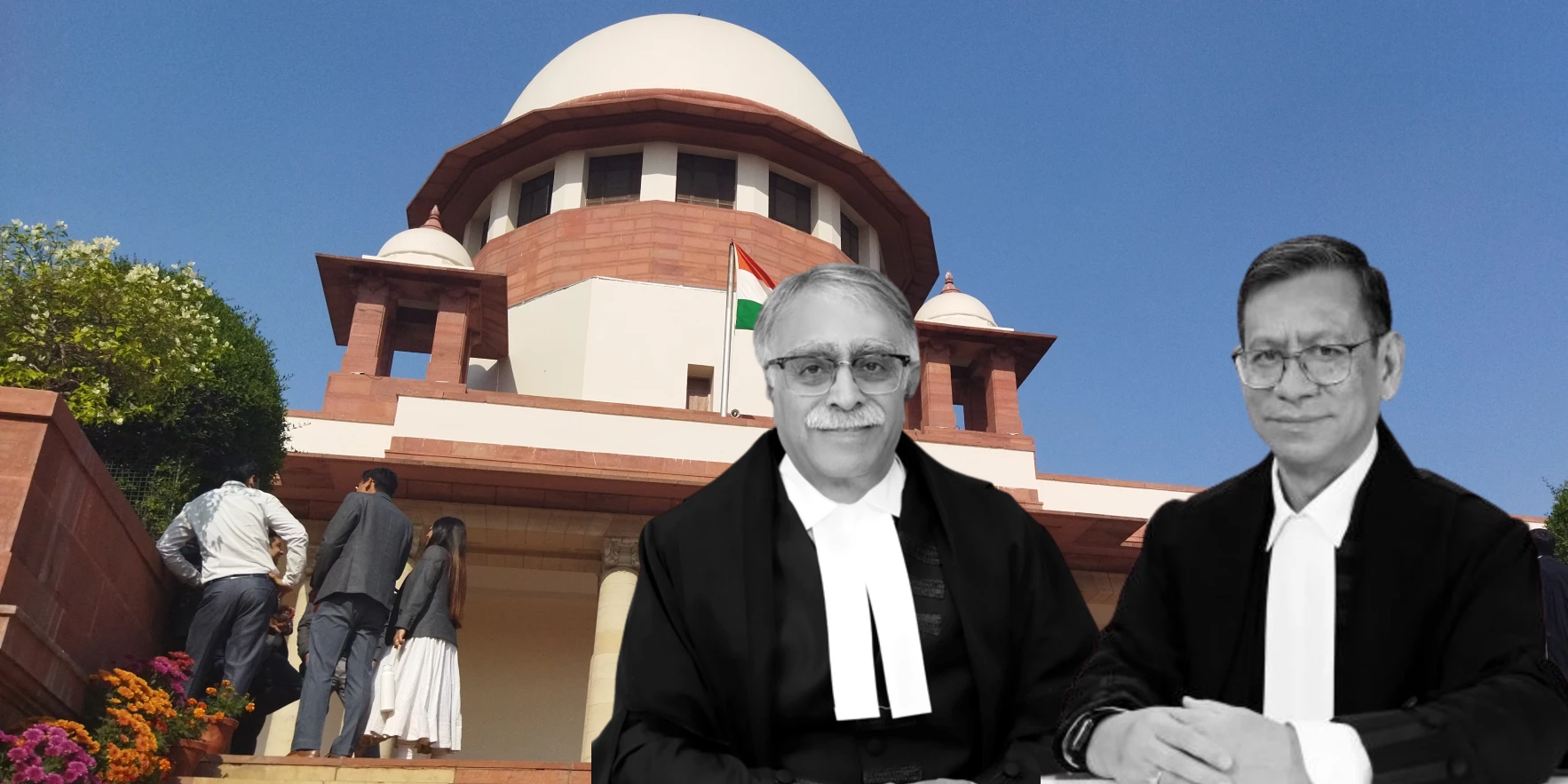
A Bench comprising Justice Sanjay Karol and Justice N. Kotiswar Singh emphasized that courts must prioritize the emotional security, dignity, mental health, and overall welfare of the child over the competing claims of litigating parents. The Court observed that excessive psychological assessments can themselves become a source of trauma and may amount to secondary victimization of the child.
The case arose from orders passed by the Bombay High Court directing the constitution of a panel of experts to evaluate a child whose father, residing in the United States, was seeking visitation rights while facing allegations of sexual abuse under the POCSO Act.
The Supreme Court found fault with the High Court’s approach, noting that it had failed to consider the psychological consequences of subjecting the child to repeated interactions with multiple experts. The Court observed that the High Court had originally directed the appointment of “an independent expert specialized in child psychology,” but later modified its order to provide for a “panel of experts” without explaining why a single expert was insufficient.
According to the Court, the distinction between an evaluation by one independent professional and repeated interactions with several experts is not merely procedural but has substantive implications for the child’s mental well-being. The Bench noted that the High Court had not examined whether multiple evaluations were necessary, whether they complied with the principle of minimum intrusion, or whether the risk of re-traumatization had been adequately considered.
The Court further observed that while expert psychological assistance may be necessary in certain custody disputes, such intervention must satisfy the requirements of necessity, proportionality, institutional neutrality, and minimal intrusion.
Importantly, the Supreme Court held that courts should not focus exclusively on assessing the child. Instead, the psychological condition of both parents should also be examined, as the mental health of parents is closely connected to the welfare and development of the child.
Accordingly, the Court directed the Family Court to first appoint a psychologist to assess the mental and psychological condition of both parents. Thereafter, the psychologist should interact with the child’s treating therapist to ascertain the child’s current psychological status. Based on these reports, the Family Court will determine whether any independent psychological assessment of the child is necessary. If such an assessment is required, it should be conducted by a single independent child psychologist with the least possible interaction so as not to disturb the child’s emotional condition.
The judgment also addresses concerns relating to “Parental Alienation Syndrome” and “False Memory Creation,” allegations often raised in contentious custody disputes. Referring to its earlier decisions, the Supreme Court cautioned that courts should not casually label a parent as engaging in parental alienation without identifying specific instances of alienating behaviour. The Court reiterated that parental alienation is essentially a question of fact rather than a psychological diagnosis.
The Bench also referred to a 2025 study conducted by psychologists from NIMHANS, Bengaluru, which highlighted the severe psychological impact that prolonged custody battles can have on children. The study identified issues such as parental conflict, emotional manipulation, false accusations, academic decline, behavioural problems, and mental health challenges among children caught in custody disputes.
In its judgment, the Supreme Court issued extensive guidelines for courts dealing with psychological evaluations of children in custody and visitation matters. Among other things, the Court held that:
Psychological evaluations should not be ordered routinely.
Courts must record specific reasons demonstrating the necessity of such evaluations.
The principle of minimum intrusion and minimum exposure must be followed.
Repeated or overlapping evaluations should ordinarily be avoided.
A single independent court-appointed expert should generally conduct the assessment.
Multi-member expert panels should be constituted only in exceptional circumstances.
The evaluation process must remain child-centric and not become an adversarial exercise.
Confidentiality of the child’s identity, disclosures, therapy records, and evaluation reports must be strictly maintained.
The Court further emphasized that judges act as parens patriae—guardians of the child’s welfare—and must remain sensitive to the changing emotional and psychological needs of children as they grow. Any evaluation process should therefore be trauma-informed, child-friendly, and designed to protect the child from unnecessary psychological distress.
Modifying the Bombay High Court’s orders dated April 27, 2023, and December 7, 2023, the Supreme Court remitted the matter to the Family Court for fresh consideration in light of the principles and directions laid down in the judgment.
The appeals were partly allowed.

Representation:-
For Petitioner(s) : Mr. Shoba Gupta, Sr. Adv., Mr. Dhiraj Abraham Philip, AOR, Ms. Lija John Merin, Adv., Ms. Soyarchon Khangrah, Adv.
For Respondent(s) : Mr. James Bedi, AOR
Website designed, developed and maintained by webexy