
The Supreme Court has quashed an externment order passed against a man in Chhattisgarh, holding that an order of externment passed without giving the affected person notice and an opportunity of hearing is void ab initio.
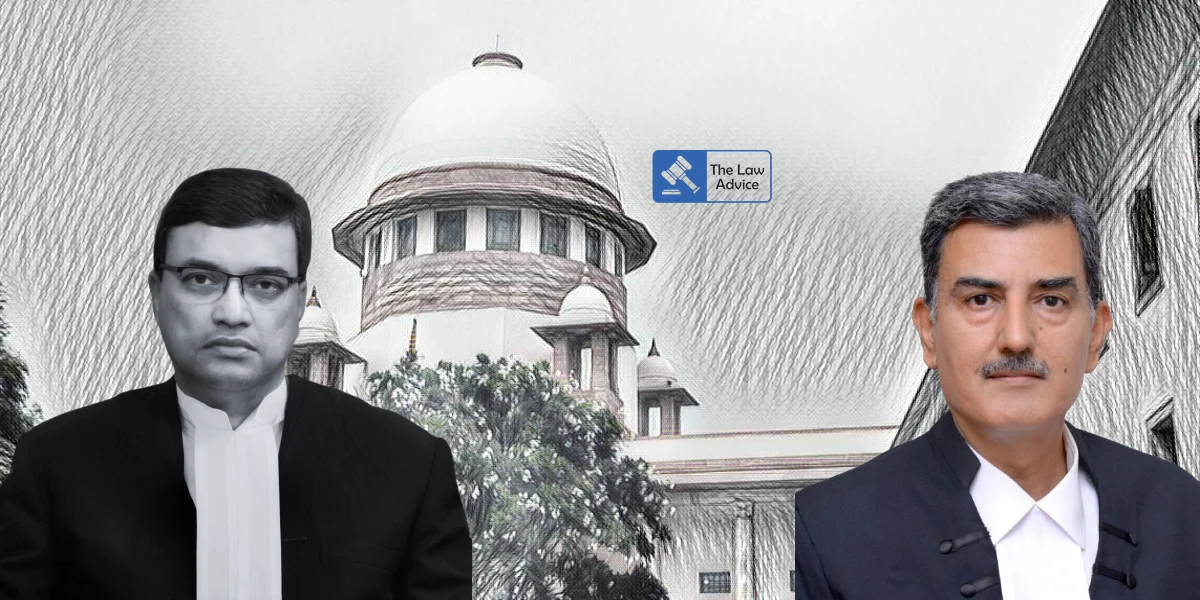
A Bench comprising Justice Dipankar Datta and Justice Sheel Nagu delivered the judgment in Vijay Kumar Rajpoot alias Vijju v. State of Chhattisgarh & Ors., 2026 INSC 926, on August 31, 2026.
The Court was dealing with an appeal against the Chhattisgarh High Court's decision which had declined to exercise its writ jurisdiction and relegated the appellant to the statutory appellate remedy under Section 9 of the Chhattisgarh Rajya Suraksha Adhiniyam, 1990. The externment order directed him to leave Raigarh district and contiguous districts for one year.
Proceedings for externment had originally been initiated in 2019 on the basis of the appellant's alleged involvement in ten criminal cases registered between 2009 and 2019.
However, on October 6, 2025, the competent authority closed the proceedings after noting that the appellant had been acquitted in the cases relied upon and that no fresh police report had been submitted against him after 2019. He was merely warned to refrain from criminal activities in the future.
The controversy was subsequently revived after two developments. One FIR relating to alleged unauthorised development of a colony was registered in 2023, while another FIR was registered in October 2025 concerning alleged abusive remarks against Baba Guru Ghasidas, a revered figure of the Satnami community.
Following a fresh police report, the earlier closure order was recalled and the appellant was externed from Raigarh and adjoining districts.
The Supreme Court rejected the State's contention that a fresh notice and hearing were unnecessary because the externment proceedings had previously involved an opportunity of hearing.
The Court examined Section 8 of the Chhattisgarh Rajya Suraksha Adhiniyam, which requires the District Magistrate, before passing an externment order, to inform the concerned person of the general nature of the allegations and provide a reasonable opportunity to explain them.
The Bench held that notice and a reasonable opportunity of hearing are conditions precedent for exercising the power of externment under Sections 3 to 6.
An order passed in breach of these mandatory requirements, the Court held, is vitiated and liable to be declared void ab initio.
The Court also noted that the statute itself specifies the circumstances in which an inquiry can proceed ex parte. Since those circumstances were absent in the present case, the District Magistrate had no statutory basis to dispense with notice and hearing.
The Supreme Court further found that the authority lacked the power to review or recall its own earlier closure order.
The Court observed that an administrative authority has no power to review its earlier order unless such power is expressly conferred by statute. No provision empowering the District Magistrate to reopen the closed externment proceedings was shown to the Court.
The Bench held that even if the appellant had breached the warning issued at the time of closure, that alone could not confer jurisdiction upon the authority to reopen the case. Once a fresh report was received, the authority was required to initiate the statutory procedure afresh, including the mandatory notice and hearing under Section 8.
The Supreme Court also criticised the High Court for refusing to examine the challenge on merits merely because the appellant had an alternative statutory remedy under Section 9.
The Bench noted that the High Court had failed to consider the appellant's allegations of breach of natural justice and lack of jurisdiction, despite these being fundamental grounds for challenging the externment order.
Relying on the principles governing exercise of writ jurisdiction under Article 226, the Court held that this was a case in which the High Court ought to have entertained the writ petition.
The Supreme Court went further and examined the validity of the externment order on its merits.
It held that the invocation of Section 5(b) was misconceived because the offences relied upon did not satisfy the statutory requirements concerning offences involving force or violence or the specified categories of offences contemplated by the provision.
As regards Section 5(a), the Court emphasised that externment is an extraordinary measure which directly affects fundamental freedoms, including the right to free movement under Article 19(1)(d).
The mere registration of multiple criminal cases, the Court held, does not ipso facto justify externment. The competent authority must have objective material before it and record a bona fide and informed subjective satisfaction that externment is necessary to prevent the apprehended danger.
The Court found that the impugned order merely referred to resentment and public outrage among certain communities but did not disclose the material supporting those conclusions or explain why externment was necessary.
The absence of notice and hearing further compounded the defect.
The Bench concluded that the externment order was “infirm and indefensible” and could not be sustained for want of cogent reasons.
Accordingly, the Supreme Court quashed both the High Court's order and the externment order. The appellant was declared free to enter the districts from which he had been externed.
The Court clarified that its observations would not constitute findings on the merits of the pending criminal cases against him.
Case: Vijay Kumar Rajpoot alias Vijju v. State of Chhattisgarh & Ors.
Citation: 2026 INSC 926
Bench: Justice Dipankar Datta and Justice Sheel Nagu
Date: August 31, 2026

Representation:-
For Petitioner(s) :Mr. Pallav Mongia, AOR Ms. Ishita Nayak, Adv. Ms. Kashish Lalwani, Adv.
For Respondent(s) :Ms. Ankita Sharma, AOR Mr. Arjun D Singh, Adv. Ms. Ishika Neogi, Ad
Website designed, developed and maintained by webexy