
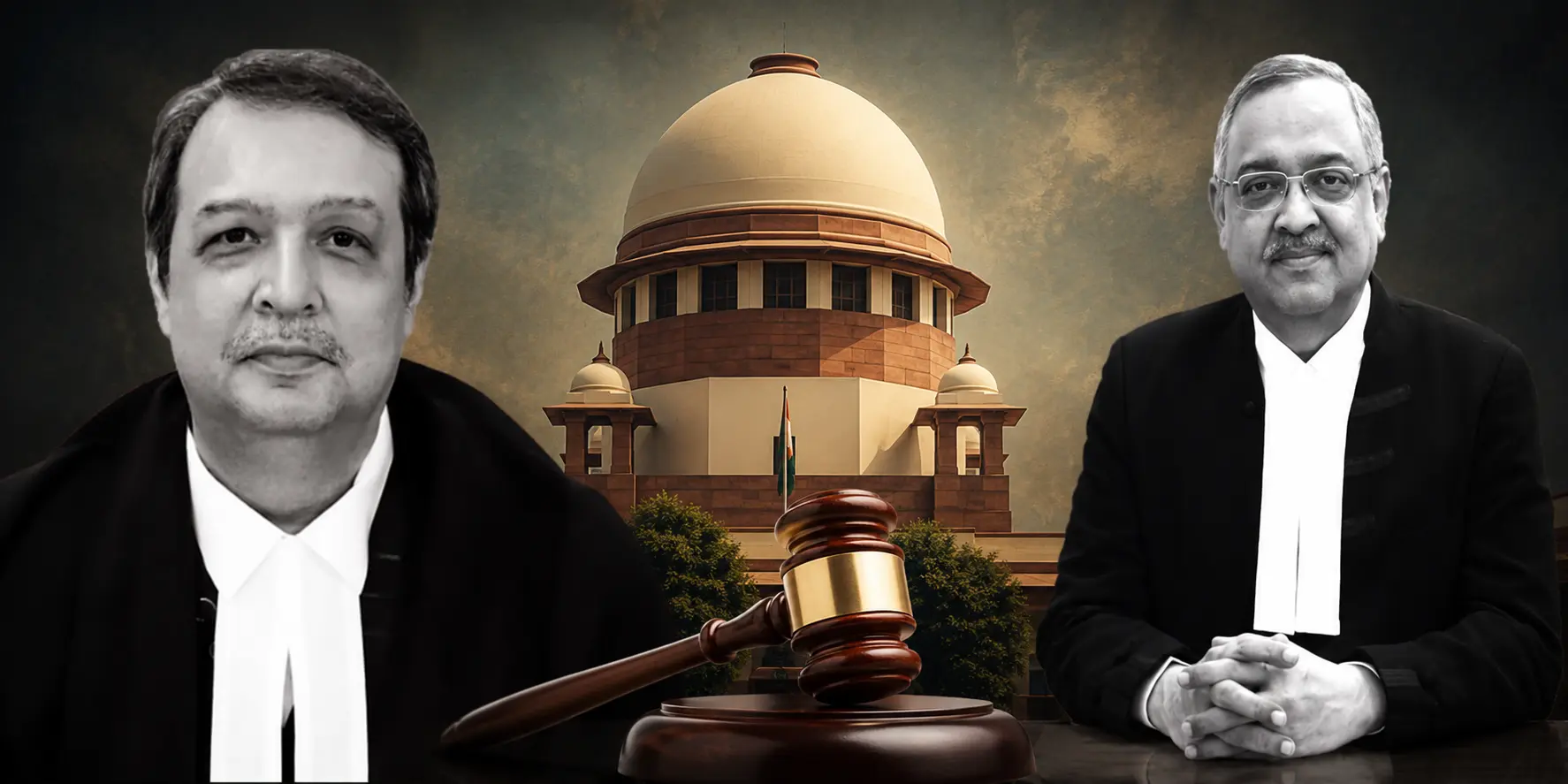
The Supreme Court has held that for determining stamp duty under the Rajasthan Stamp Act, 1998, the actual use of the property is the decisive factor, rather than its classification under the Master Plan.
A Bench comprising Justice J.B. Pardiwala and Justice K. Vinod Chandran delivered the judgment on August 24, 2026, in Harinder Singh Sodhi v. State of Rajasthan & Ors., 2026 INSC 922.
The Court was considering whether a property covered by a gift deed should be treated as industrial or commercial property for calculating stamp duty. The property had been registered as residential land, while the authorities found that it was being used for manufacturing activity.
The property was owned by a family conducting business from a multi-storey building. One brother subsequently gifted his share in the property to another brother. The gift deed was registered by applying the valuation applicable to residential premises.
The Sub-Registrar, after inspecting the property, considered it to be commercial, particularly because a showroom in the name of “Sodhi Carpets” was operating there. The Sub-Registrar also noted the presence of several commercial establishments in the area.
The Collector, however, conducted a separate physical inspection and found that the premises were being used as a factory and for manufacturing activity. The Rajasthan Tax Board agreed with the Collector after considering both inspection reports and the applicable Rajasthan Government circular.
The State challenged the statutory authorities' findings before the High Court.
The High Court held that industrial use should be determined by considering, among other things, whether the property was situated in an industrial area and whether the activity conducted there was exclusively manufacturing.
Since manufactured goods were also being sold from the premises, the High Court concluded that the property should be treated as a commercial building.
The Supreme Court disagreed with the High Court's approach.
The Court noted that the property had been registered as a factory under the Factories Act, 1948 and was also registered as an industry with the District Industries Centre, Jaipur.
The Court observed that merely because manufactured goods were sold from the premises, including through retail sale, it could not automatically be concluded that the property had ceased to be industrial in nature.
According to the Court, the sale of manufactured goods is a natural part of industrial activity and does not, by itself, convert an industrial premises into commercial premises.
The Supreme Court placed particular reliance on Circular No. 2/2004 issued by the Government of Rajasthan, which provides the methodology for valuation of different categories of land for stamp duty purposes.
The Court noted that the circular focuses on the user of the land, rather than merely its classification.
Under the circular, if at the time of execution of the document the land is being put to industrial use, is situated in a RIICO Industrial Area, or has been converted for industrial purposes, it is to be valued at the applicable industrial rate.
The Court therefore held that “the user determines the valuation of the land, as distinguished from the classification.”
The Bench held that the High Court had erred in prescribing a test that was not contained in the Rajasthan Government's valuation circular.
The Supreme Court observed that the statutory authorities had undertaken physical inspection and found manufacturing activity at the premises. The property's registration as a factory and as an industry also assumed significance while determining its appropriate valuation.
The Court accordingly set aside the High Court's order and restored the orders of the statutory authorities.
The Supreme Court clarified that although the gift deed had adopted the valuation applicable to residential land—which was higher than the valuation applicable to industrial land—the appellant would not be entitled to a refund of the excess duty.
The Court noted that the valuation had been voluntarily adopted by the executant of the gift deed with full knowledge of the circumstances.
The appeal was consequently allowed, and the statutory authorities' findings were restored.
Case: Harinder Singh Sodhi v. State of Rajasthan & Ors.
Citation: 2026 INSC 922
Bench: Justice J.B. Pardiwala and Justice K. Vinod Chandran
Date: August 24, 2026

Representation:-
For Petitioner(s) :Mr. Anant Kasliwal, Sr. Adv. Mr. Vaibhav Kasliwal, Adv. Mr. Bhargava V. Desai, AOR Mr. Shivam Sharma, Adv. Mr. Utkarsh Vats, Adv. Ms. Prakriti Rastogi, Adv. Ms. Surbhi Tuli, Adv.
For Respondent(s) :Mr. Shiv Mangal Sharma, A.A.G. Mr. Shivansh B. Pandya, Adv. Mr. Saurabh Rajpal, AO
Website designed, developed and maintained by webexy