
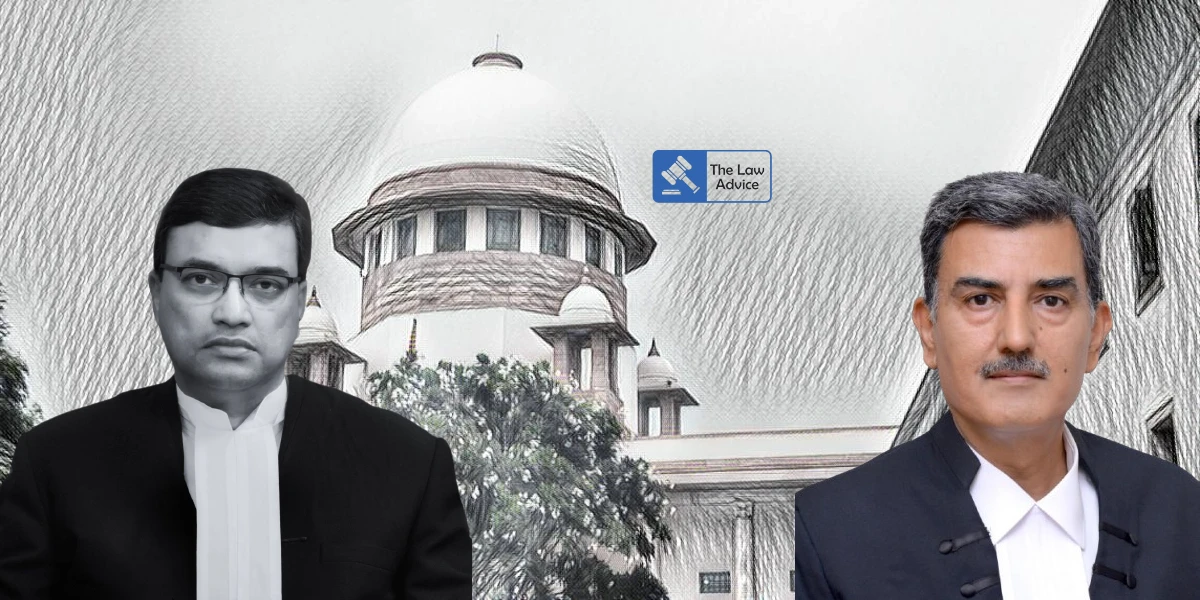
The Supreme Court has dismissed an appeal filed by Sunita Lahu Panchpande, upholding the Bombay High Court’s decision setting aside her appointment as an Anganwadi Supervisor in Nashik district.
A Bench comprising Justice Dipankar Datta and Justice Sheel Nagu held that Panchpande did not satisfy the mandatory eligibility requirement of having 10 years’ experience as an Anganwadi Sevika in Nashik district. The Court found that her appointment was made contrary to the terms of the recruitment advertisement and the applicable Government Resolution.
Panchpande had been working as an Anganwadi Sevika in Jalgaon district since February 1992. In April 2013, the Nashik Zilla Parishad issued an advertisement for various posts, including Anganwadi Supervisor.
The advertisement specifically required applicants to have 10 years or more of experience as an Anganwadi Sevika and stated that only Anganwadi Sevikes currently working under the Integrated Child Development Services Scheme in Nashik district could apply. Despite having no experience in Nashik district, Panchpande applied, was selected and placed first on the waiting list for an OBC-reserved vacancy. She was subsequently appointed on March 4, 2014, after the appointment of another candidate was cancelled.
The Court noted that after the merit and waiting lists were prepared, the Nashik Zilla Parishad sought clarification regarding whether 10 years of experience in the same district was mandatory.
The Divisional Commissioner, Nashik, issued a clarification on November 19, 2013, stating that the 2001 Government Resolution did not clearly require the experience to have been acquired within the same district.
The Supreme Court, however, held that this interpretation was incorrect. On a combined reading of the relevant clauses of the 2001 Government Resolution, the Court concluded that the required 10 years' experience had to be acquired in the same district.
The Bench further held that the Divisional Commissioner could not issue a clarification that was contrary to the Government Resolution. If clarification was required, the matter ought to have been referred to the appropriate department of the State Government.
The Supreme Court also relied upon the instructions contained in the recruitment advertisement and the call letter issued to Panchpande.
The Court observed that the advertisement expressly required a certificate showing 10 years of work experience as an Anganwadi Sevika in Nashik district. Since Panchpande had worked in Jalgaon district, she was not even qualified to apply for the post.
The Court also found fault with the Zilla Parishad for failing to properly scrutinise her credentials before allowing her candidature to proceed.
The Bench referred to its earlier judgment in District Collector & Chairman, Vizianagaram Social Welfare Residential School Society v. M. Tripura Sundari Devi, which emphasised that when an advertisement prescribes a particular qualification, an appointment made in disregard of that requirement affects other eligible candidates who may have refrained from applying because they did not possess the prescribed qualification.
Applying that principle, the Supreme Court held that appointing an ineligible candidate contrary to the advertisement amounted to a “fraud on public.” The Court found no provision in the advertisement permitting relaxation of the essential qualification.
The Supreme Court concluded that Panchpande’s appointment, having been made on the basis of an erroneous clarification and contrary to the advertisement, did not confer any right upon her to continue as an Anganwadi Supervisor in Nashik district.
While upholding the Bombay High Court judgment, the Court noted that the High Court had taken a “prudent and compassionate view” by observing that Panchpande could be accommodated as an Anganwadi Sevika in Jalgaon district.
The Supreme Court accordingly dismissed the appeal and directed that the benefits flowing from the High Court judgment be extended to the successful writ petitioner, Gitanjali Sudhakar Shirsat, within two months if not already provided. Panchpande was permitted to complete any unfinished work until September 30, 2026, after which she could not continue on the post she had been holding.
Case: Sunita Lahu Panchpande v. The District Collector & Ors.
Citation: 2026 INSC 1002
Civil Appeal No.: 6379 of 2023
Judgment Date: September 16, 2026
Bench: Justice Dipankar Datta and Justice Sheel Nagu.

Representation:-
For Appellant(s) : Mr. Satyajit A. Desai, Adv. Mr. Pratik Kumar Singh, Adv. Mr. Shashank Upadhyay, Adv. Mr. Vishwesh Shankar Gadage, Adv. Ms. Anagha S. Desai, AOR
For Respondent(s) :Mr. Sandeep Sudhakar Deshmukh, AOR Mr. Nishant Sharma, Adv. Mr. Ankur Savadikar, Adv. Mr. Kartik Sharma, Adv. Mr. Raman Yadav, Adv. Mr. Siddharth Dharmadhikari, Adv. Mr. Aaditya Aniruddha Pande, AOR Mr. Shrirang B. Varma, Adv. Mr. Dilip Annasaheb Taur, AOR Mr. Amol V Deshmukh, Ad
Website designed, developed and maintained by webexy