
The Supreme Court has held that subsequent purchasers of a property are necessary parties to a suit in which a plaintiff seeks a declaration regarding his status as a tenant-occupier of the property, particularly when the predecessor-in-title of the purchasers was already a party to the suit.
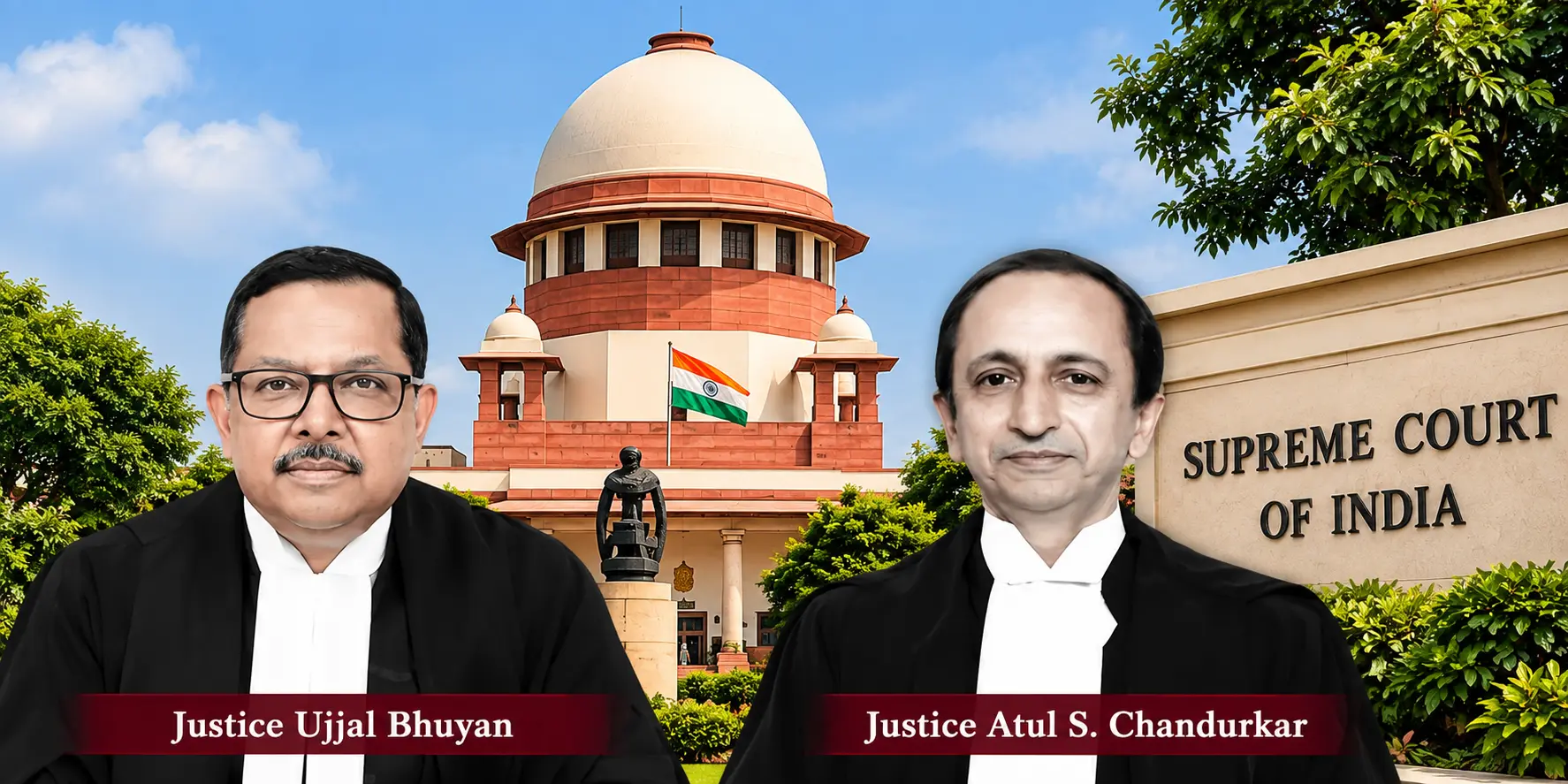
A Bench comprising Justice Ujjal Bhuyan and Justice Atul S. Chandurkar made the observation while allowing an appeal filed by Rasilaben and another against the order of the Gujarat High Court.
The dispute arose from a civil suit filed by the respondent claiming to be a tenant of approximately 2,000 square feet of Plot No. 63, on a monthly rent of ₹1,000. The plaintiff sought a declaration that he was occupying the premises as a tenant and was entitled to continue enjoying the premises without reservation. He had also sought other reliefs, including a permanent injunction.
The erstwhile owner of the property, Smt. Javerben Navinbhai Shah, had been impleaded as the first defendant in the suit.
During the pendency of the suit, the appellants purchased the suit property from the erstwhile owners, including the first defendant, through a registered sale deed dated August 23, 2002.
An earlier application for impleadment had been filed by the husband of the first appellant, Dr. Mukesh V. Hamipara. However, he died on May 11, 2007, before the application could be decided, and the application was subsequently rejected as it was not prosecuted.
The appellants later filed another application, Exhibit 108, seeking their impleadment as defendants on the ground that they had acquired an interest in the suit property through the registered sale deed.
The trial court rejected the application in 2015, and the Gujarat High Court upheld the decision on January 30, 2024, holding that the appellants were neither necessary nor proper parties to the suit.
The Supreme Court disagreed with the approach adopted by the courts below.
The Court noted that the plaintiff was seeking a declaration of his legal status as a tenant-occupier in respect of a portion of the property. Since the erstwhile owner against whom such declaration was sought had transferred her interest to the appellants, the appellants had acquired sufficient legal interest to defend the suit.
The Court observed that the nature of the relief sought in the plaint was crucial for deciding the application for impleadment. The plaintiff had specifically sought a declaration that he was a tenant-occupier of the 2,000 square feet area.
The Supreme Court held that in the absence of the owner of the property against whom such declaration was sought, the relief could not properly be considered.
Since the original owner had transferred her interest to the appellants, their presence as owners of the suit property was necessary.
The Court therefore held that the appellants were necessary parties to the suit for declaration of legal status.
The Supreme Court also considered the argument that the earlier application for impleadment would prevent the appellants from filing another application.
Rejecting this contention, the Court noted that the earlier application filed by the appellants' predecessor had not been rejected on merits. It had been dismissed because it was not prosecuted following his death.
Therefore, such rejection on technical grounds did not prevent the legal heirs from taking steps to protect their legal interests in the property.
The Court also rejected the argument that the principle of res judicata would apply.
The Supreme Court found that the trial court had proceeded on the basis that the dispute was essentially between the plaintiff and the State authorities and that no relief had been claimed against the owner.
The Supreme Court held that this failed to take into account the first prayer in the plaint, which was the principal relief seeking a declaration regarding the plaintiff's tenant-occupier status.
Accordingly, the Court concluded that the erroneous exercise of discretion by the trial court, affirmed by the High Court, had caused legal prejudice to the appellants and warranted interference.
The Supreme Court set aside the order passed by the 5th Additional Senior Civil Judge, Gandhidham in RCS No. 486 of 2006, as well as the Gujarat High Court's order dated January 30, 2024, in Special Civil Application No. 3385 of 2016.
The application filed by the appellants under Exhibit 108 was allowed and they were directed to be impleaded as defendants in the suit.
The Court clarified that the suit would be decided on its own merits and that the observations made in the Supreme Court judgment would not influence the final adjudication.
The civil appeal was accordingly allowed, with the parties directed to bear their own costs.
Case: Rasilaben & Anr. v. Dinesh Deumal Harani & Ors.
Citation: 2026 INSC 1016
Civil Appeal No.: 9049 of 2026
Court: Supreme Court of India
Bench: Justice Ujjal Bhuyan and Justice Atul S. Chandurkar

Representation:-
For Appellant(s): Mr. Nachiketa Joshi, Sr. Adv. Ms. Sucheta Joshi, Adv. Mr. Sai Shashank, Adv. Ms. Sagrika Arya, Adv. Ms. Ruchil Raj, Adv. Mr. Monu Kumar, Adv. Mr. Shivam Singhania, Adv. Mr. Ayush Anand, AOR
For Respondent(s): Dr. Alex Joseph, AOR Ms. Dhruvi Sikarwar, Adv. Mr. Mayank Dwivedi, Adv. Ms. Albina Sebastian, Adv. Ms. Supriya Verma, Adv. Mrs. Sangeetha Mr, Adv.
Website designed, developed and maintained by webexy