
In a rare exercise of its extraordinary powers under Article 142 of the Constitution, the Supreme Court has set aside the conviction of a man sentenced under the Protection of Children from Sexual Offences (POCSO) Act after noting subsequent developments, including the victim's marriage to the accused and her desire to bring the litigation to an end.
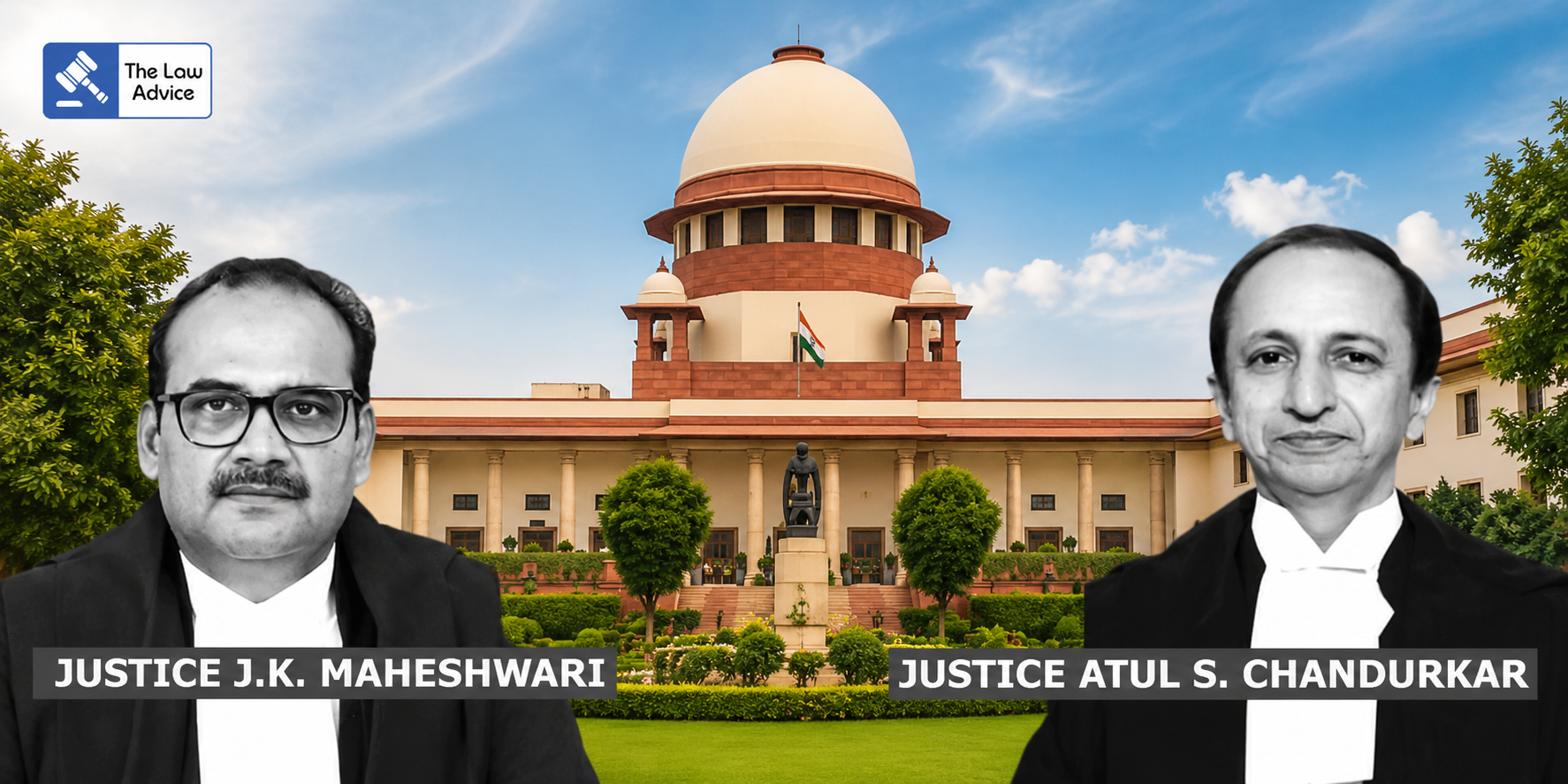
A Bench of Justices J.K. Maheshwari and Atul S. Chandurkar passed the order in the case of Maruthupandi v. State represented by the Inspector of Police.
The appellant had been convicted in 2019 by a Fast Track Mahila Court in Tamil Nadu under Section 5(1) read with Section 6 of the POCSO Act and sentenced to ten years' imprisonment. The conviction arose from allegations that he had sexual relations with the victim when she was a minor after promising to marry her.
During the pendency of the appeal, the victim repeatedly approached the courts expressing her desire to depose further and stating that she wished to support the appellant. The Supreme Court directed the recording of her statements before a Magistrate. In those statements, the victim confirmed that she and the appellant had been in a relationship for several years and later disclosed that they had solemnised their marriage on December 5, 2024.
The Court also noted that, pursuant to its directions, the appellant paid ₹10 lakh to the victim as compensation and financial security. The victim informed the Court that she had received the entire amount and no longer wished to pursue the litigation. She expressly stated that she had no objection if the conviction was set aside.
Taking note of these "peculiar facts and circumstances," the Bench observed that the parties had married after attaining majority and intended to live together as spouses. The Court held that, without examining the merits of the original conviction, it was appropriate to invoke its plenary powers under Article 142 to do complete justice between the parties.
Accordingly, the Supreme Court set aside the conviction and sentence imposed by the trial court and affirmed by the High Court, acquitting the appellant of the charges under the POCSO Act.
However, the Court issued an important caveat, stressing that the order was passed solely on the exceptional facts of the case and "shall not be treated as a precedent" for any other matter involving offences under the POCSO Act.
The judgment is likely to attract attention because courts have generally maintained that serious offences under the POCSO Act cannot ordinarily be quashed merely on the basis of compromise or marriage between the victim and the accused. The Supreme Court, however, emphasized that its decision was rooted in the unique factual matrix before it and the interests of the parties involved.

Representation:-
For Petitioner(s) : Mr. Rahul Shyam Bhandari, AOR, Ms. G Priyadharshni, Adv., Mr. Satyam Pathak, Adv.
For Respondent(s) : Mr. Sabarish Subramanian, AOR, Ms. Arpitha Anna Mathen, Adv., Mr. Konark Tyagi, AOR
Website designed, developed and maintained by webexy