
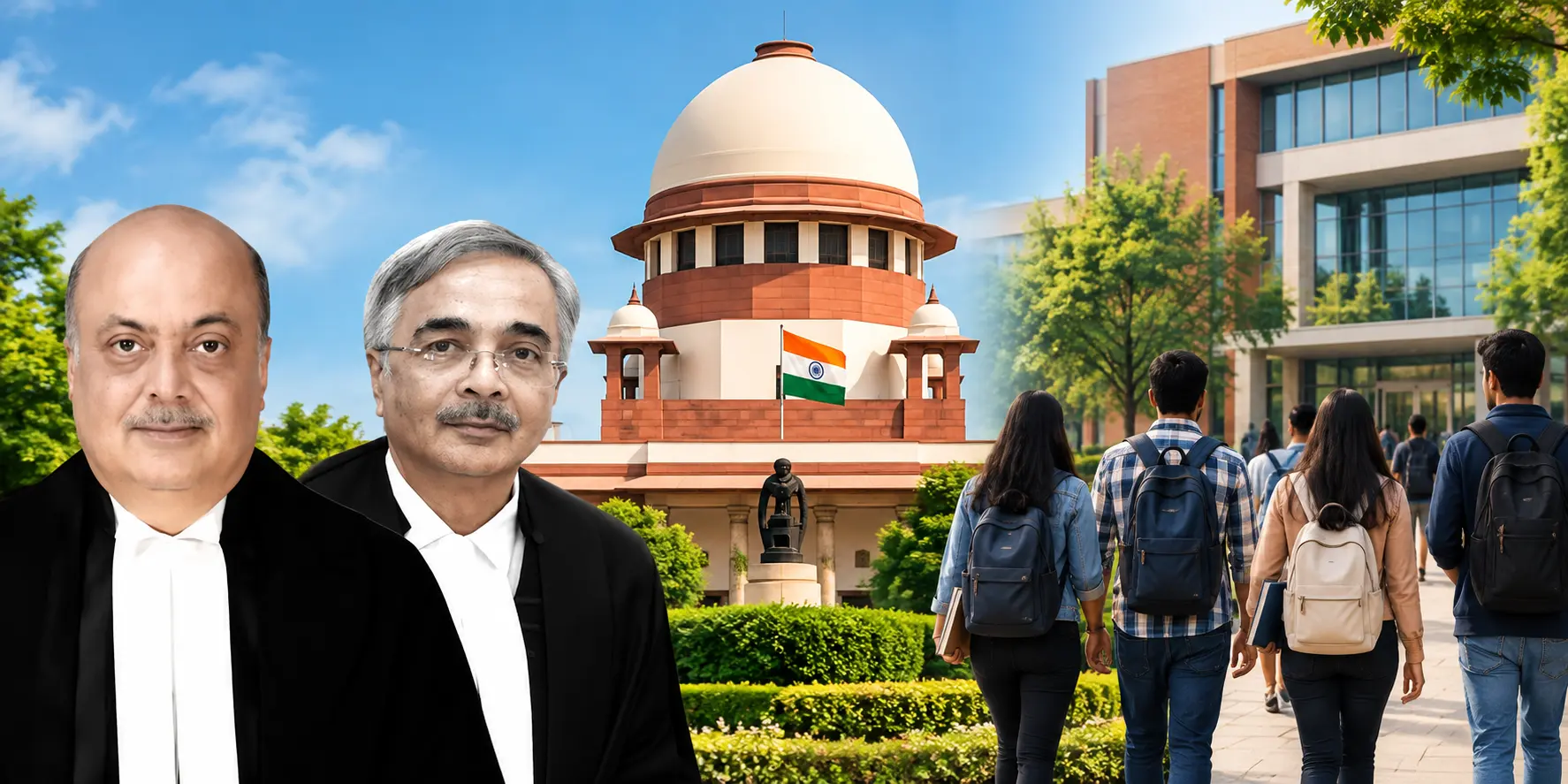
The Court observed that education is ultimately meant to serve the public and made it clear that no private university shall be allowed to be run as a profit-making institution.
The Court said that such institutions must serve an educational purpose while maintaining sufficient financial resources for their smooth functioning and for suitable compensation to teaching and non-teaching employees.
It further directed that surplus resources should not be diverted towards payments or facilities for members of governing boards or management bodies who are not directly involved in the educational functioning of the institution.
The Supreme Court directed the States to ensure that universities within their jurisdiction submit audited reports for the previous five years.
The reports are required to disclose funds generated by the universities, their utilisation and payments made to individuals who may not be directly involved in the functioning of the institution.
Universities have also been directed to disclose benefits received from the Central or State Governments, including allotment of land, relaxations under existing laws and other privileges.
The Court further directed universities to disclose the exact procedure followed for admitting students to every course.
The disclosures must identify persons responsible for admissions, setting examination papers, conducting examinations, evaluating answer sheets, handling funds and the role played by the management in these processes.
Universities have also been directed to provide details of fees collected at the time of admission and during the course, including any additional collections under descriptions such as development funds or funds for special events.
The Court directed universities to provide detailed information regarding the manner in which surplus funds are dealt with, including investments made from such funds.
It also sought details regarding recruitment of teaching and non-teaching staff, their salaries and other emoluments, payment mechanisms and service conditions.
The universities have additionally been asked to provide details from January 2025 onwards regarding allocation of classes to teaching staff, classes actually taken and alternative arrangements made where teachers were unavailable.
The Supreme Court also directed disclosure of the mechanism available for redressal of grievances, including its composition, the nature of complaints it can consider, the number of complaints received and their outcomes during the previous three years.
The Court directed affiliating and regulatory bodies, including the National Medical Commission, Dental Council of India, National Commission for Allied and Healthcare Professions, Indian Nursing Council, Bar Council of India and other professional bodies, to disclose details of inspections conducted during the previous five years.
They have also been directed to disclose deficiencies identified during their last inspection and whether those deficiencies have subsequently been rectified.
The Court imposed a fine of Rs. 5 lakh on each respondent who was not represented when the matter was taken up, directing that the amount be deposited in the Registry within two weeks.
The highest authority through whom such respondent was represented was also directed to show cause as to why there was no representation before the Court.
The Supreme Court cautioned the Union and State Governments against withholding information concerning universities and colleges.
It directed that the required affidavits be personally affirmed by the respective Chief Secretaries, with States required to procure the information from universities and colleges and ensure its production before the Court.
The Bench also dealt with a separate issue concerning the safety of children in Delhi schools. The Court transferred proceedings pending before the Delhi High Court to itself and directed that the matter be tagged with the present proceedings.
The Court authorized the inspection team headed by Dr. R.M. Sharma to inspect schools and directed schools and government and police authorities to fully cooperate with the inspection.
The petitioner had raised concerns regarding derogatory and defamatory social-media posts concerning her.
The Supreme Court directed that social-media posts relating to the incident under consideration, including AI-generated content, should not be uploaded and that such content, if already uploaded, should be withdrawn.
The Court also directed the Ministry of Electronics and Information Technology (MeitY) to be impleaded as a respondent and asked it to ensure compliance with the direction.
The matter has been listed for November 19, 2026 at 2:00 PM.
Case: Ayesha Jain v. Amity University, Noida & Ors.
Case No.: W.P. (Civil) No. 531 of 2025
Date of Order: September 17, 2026
Bench: Justice Ahsanuddin Amanullah and Justice N.V. Anjaria

Website designed, developed and maintained by webexy