
The Supreme Court on Wednesday orally observed that it generally adopts a “very liberal” approach while considering bail in cases involving Ganja under the Narcotic Drugs and Psychotropic Substances Act, 1985 (NDPS Act).
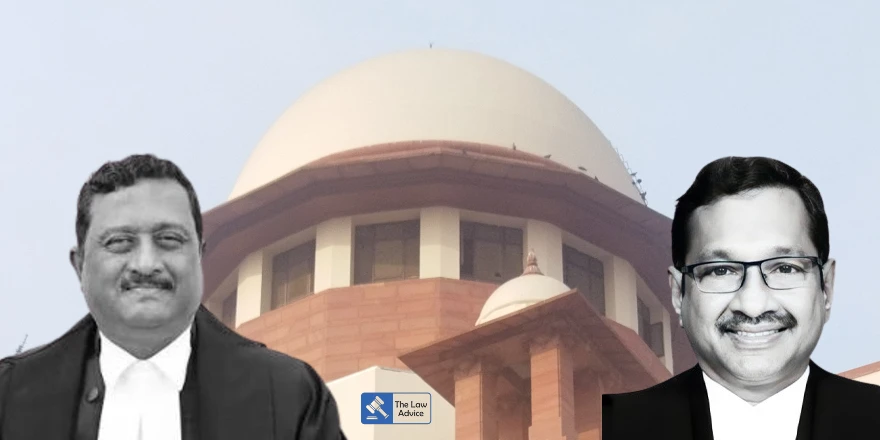
A Bench comprising Justice MM Sundresh and Justice PB Varale made the observation while hearing an anticipatory bail plea filed by Biswanath Mandal, who is accused in an NDPS case involving the alleged recovery of a “huge quantity” of Ganja.
The Bench, however, declined to grant anticipatory bail to Mandal and suggested that he surrender before the competent court and seek regular bail.
During the hearing, the Bench orally remarked:
“When it comes to Ganja, we are very liberal. Whenever it comes to us, we grant bail.”
The Court indicated that if Mandal’s regular bail application is rejected by the trial court, he could approach the Supreme Court thereafter.
The case arose from an FIR in which Ganja was allegedly recovered from Mandal’s wife at a house where she was residing. Mandal was not present at the time of the search and seizure. The Calcutta High Court had nevertheless rejected his anticipatory bail plea, observing that he could not completely disassociate himself from the contraband recovered from the premises as the owner of the house.
The High Court had also relied upon the restrictions contained in Section 37 of the NDPS Act, which imposes stringent conditions for granting bail in cases involving commercial quantities of narcotic drugs or psychotropic substances.
Before the Supreme Court, counsel for Mandal argued that the statutory framework under Section 37 contains an exception where the Court can grant bail if there are reasonable grounds to believe that the accused is not guilty and is unlikely to commit an offence while on bail.
Counsel further submitted that the house from which the contraband was allegedly recovered did not belong to Mandal.
The Bench responded by observing that the question of ownership and the circumstances surrounding the recovery were matters that could be examined during the investigation.
When counsel sought time for Mandal to surrender and move a regular bail application, the Court indicated that such a course could be adopted.
The Bench also declined to rely on a previous Supreme Court judgment cited by the petitioner for seeking anticipatory bail, observing that the earlier decision would have to be considered in the context of the facts of that particular case.
The Supreme Court ultimately dismissed the anticipatory bail plea, while indicating that Mandal could surrender and pursue regular bail before the appropriate court and, if necessary, approach the Supreme Court thereafter.
Case: Biswanath Mandal v. The State of West Bengal
Bench: Justice MM Sundresh and Justice PB Varale
Issue: Anticipatory bail in an NDPS case involving alleged recovery of Ganja
Website designed, developed and maintained by webexy