
The Supreme Court has clarified that a grievous or life-threatening injury is not a necessary requirement for attracting Section 307 IPC, which deals with attempt to murder. The Court, however, held that the prosecution must establish the requisite intention or knowledge on the part of the accused.
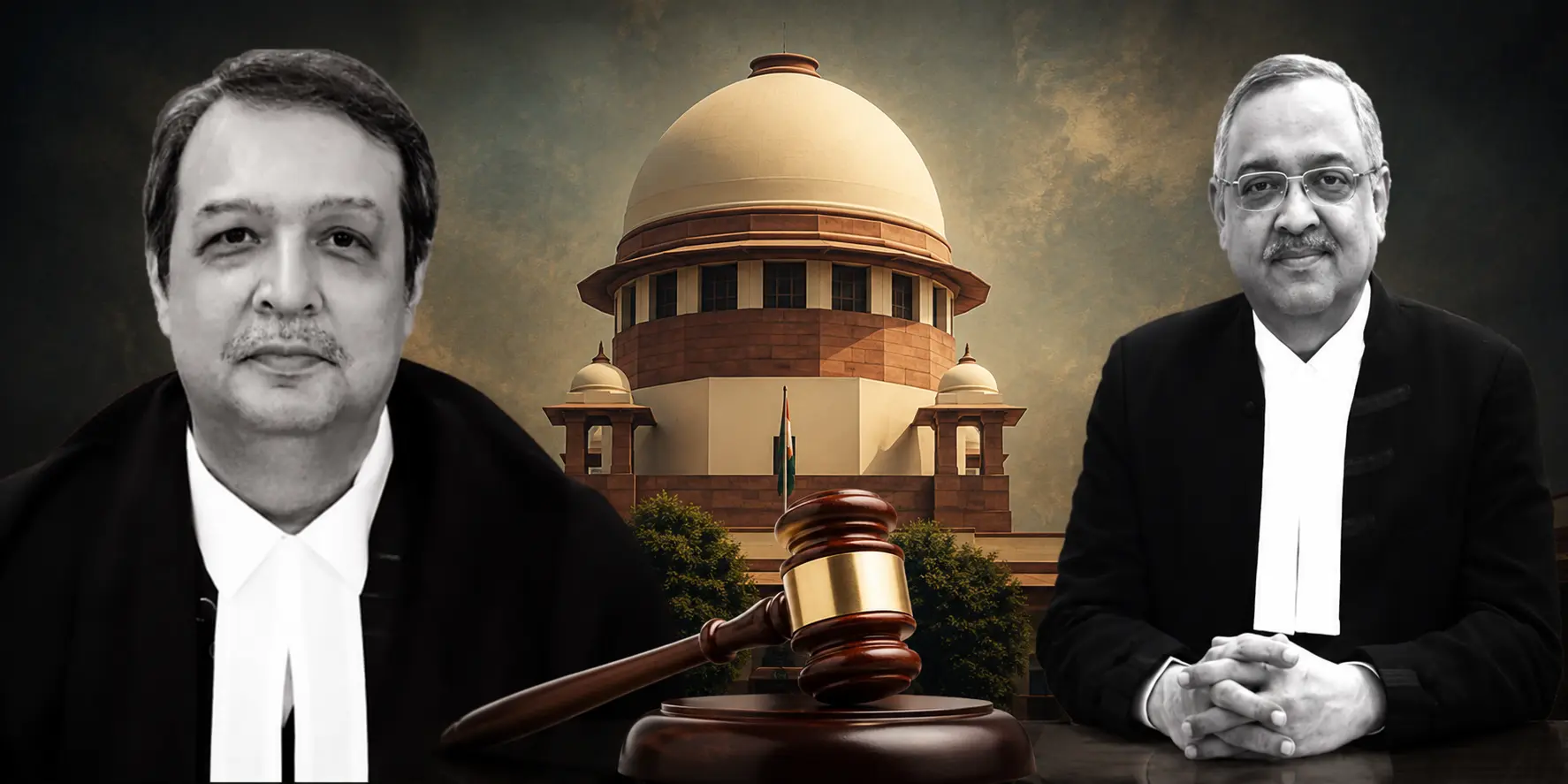
A Bench comprising Justice J.B. Pardiwala and Justice K. Vinod Chandran dismissed a Special Leave Petition filed by Surender Kumar, challenging orders refusing to add Section 307 IPC to the charges in a criminal case arising from an assault following a dispute over waterlogging caused by the drainage of rainwater.
According to the case, a dispute arose over waterlogging caused by the draining of rainwater. The petitioner, his brother and uncle were allegedly assaulted by armed persons, resulting in multiple injuries to the petitioner and his brother.
An FIR was registered at Police Station Nissing, Karnal, under Sections 147, 148, 149, 323, 325 and 506 IPC, with six accused persons arrayed in the case. Charges were framed and the trial commenced.
The petitioner's brother had suffered a fracture of the right parietal bone with underlying haemorrhagic contusion. A neurosurgeon who treated him in a private hospital opined that the injury could have been dangerous to life. However, a Medical Board subsequently opined that although the injuries were grievous, they did not pose a danger to life.
After the prosecution witnesses had been examined, the petitioner sought alteration of the charge to include Section 307 IPC.
The Judicial Magistrate rejected the application, relying on the Medical Board's opinion. The Sessions Court also dismissed the revision, noting, among other things, that there was no allegation by the first informant that the accused had attacked them with an intention to kill. The High Court subsequently agreed with the lower courts, particularly relying on the Medical Board's opinion over that of the private-hospital neurosurgeon.
The Supreme Court disagreed with the approach of focusing solely on the nature or severity of the injury.
The Bench explained that the grievousness of the injury or the possibility that the injury could have caused death is not, by itself, a necessary ingredient for attracting Section 307 IPC. The essential question is whether the accused committed an act with the intention or knowledge that, if death had resulted from that act, the accused would have been guilty of murder.
The Court further explained that even a simple injury can fall within the ambit of Section 307 if the act causing the injury was accompanied by the requisite intention or knowledge.
Relying on earlier decisions including State of Madhya Pradesh v. Kashiram, Chimanbhai Jagabhai Patel v. State of Gujarat, State of M.P. v. Saleem, State of M.P. v. Kanha and Jage Ram v. State of Haryana, the Court reiterated that the absence of a fatal injury does not by itself rule out an offence under Section 307. The intention or knowledge has to be determined from the circumstances surrounding the incident.
At the same time, the Supreme Court clarified that the nature of the injury remains relevant while determining whether the requisite intention or knowledge existed.
The Bench observed that the nature of the hurt, though relevant, cannot on that sole basis establish an attempt to murder. In the present case, the Sessions Court's finding that there was no allegation of the requisite intention or knowledge could be considered a valid reason for refusing to add Section 307.
The Court also considered the timing of the petitioner's application.
It noted that the trial had already proceeded substantially and that both medical certificates were available when the chargesheet was filed. Despite this, no allegation regarding an intention or knowledge attracting Section 307 was raised at the initial stage, at the time of cognizance, or while evidence was being led.
The Court therefore held that the application, made at a late stage, could not be entertained in the circumstances of the case.
While dismissing the petition, the Supreme Court made an important clarification: the court retains the power to alter a charge at any time during the trial, provided there is a sound and justifiable basis emerging from the evidence on record.
The Special Leave Petition was accordingly dismissed.
Case: Surender Kumar v. State of Haryana & Ors.
2026 INSC 1006
SLP (Crl.) No. 14611 of 2026
Judgment: September 8, 2026
Bench: Justice J.B. Pardiwala and Justice K. Vinod Chandran

Representation:-
For Petitioner(s) :Mr. Raghav Nagpal, Adv. Mr. Siddharth Jain, AOR
For Respondent(s) :Mr. Raj Singh Rana, A.A.G. Mr. Samar Vijay Singh, AOR Ms. Sabarni Som, Adv. Mr. Aman Dev Sharma, Adv. Mr. Karan Kapoor, Adv. Mr. Manik Kapoor, Adv. Mr. Shrey Kapoor, AOR
Website designed, developed and maintained by webexy